
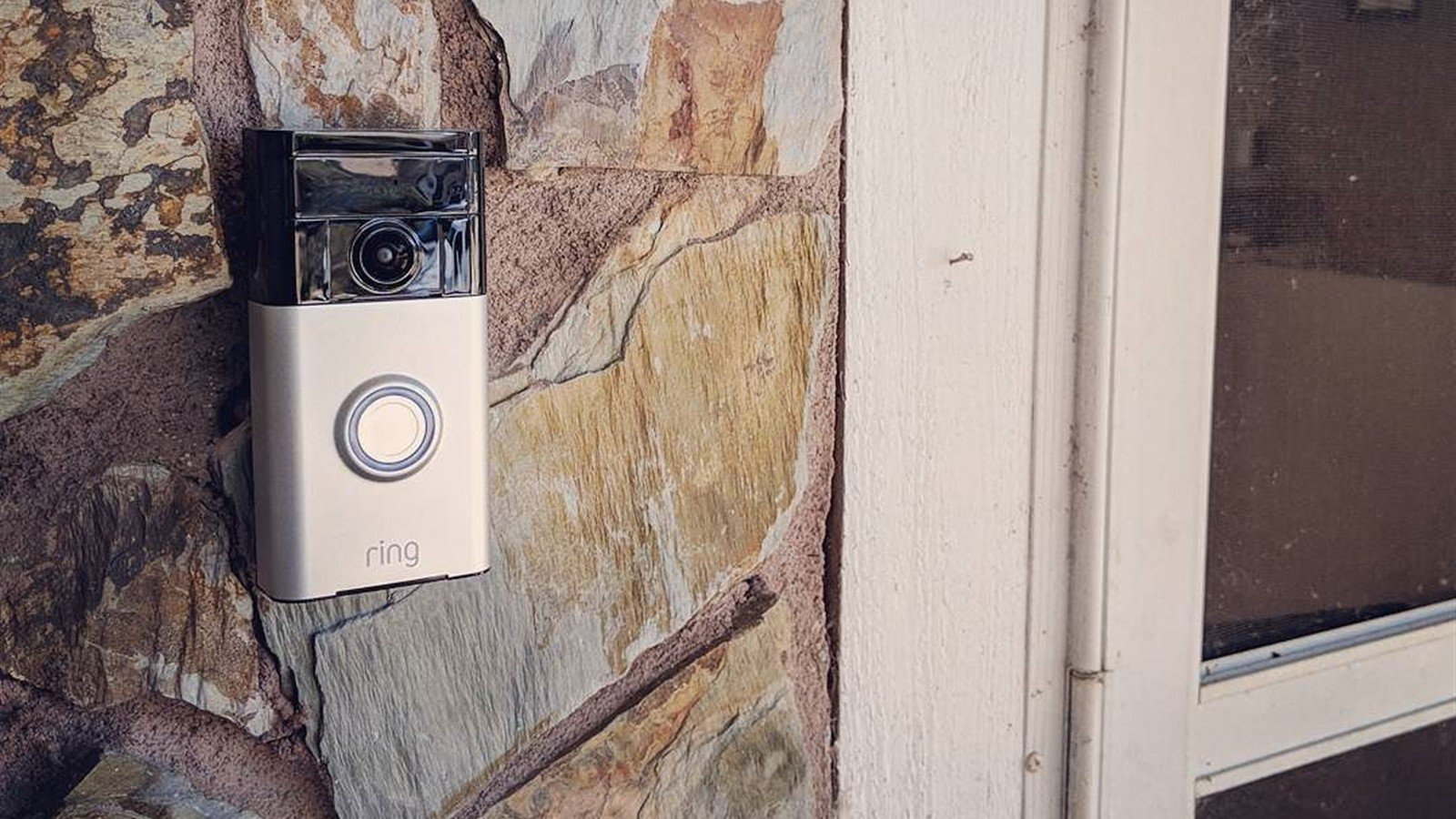
The Ring Battery Video Doorbell Plus 2nd Gen review below examines whether sharper 2K video, a removable battery and improved night performance are enough to justify its price and continuing subscription costs.
Ring announced this second-generation model in March 2026, with general availability beginning on 29 April 2026. It sits between the basic Battery Video Doorbell and the considerably more expensive Battery Video Doorbell Pro. Its official UK list price is GBP 149.99, while the stated launch prices were USD 179.99 in the United States and AUD 249 in Australia.
This post contains affiliate links. As an Amazon Associate, I earn from qualifying purchases at no additional cost to you.
Ring Battery Video Doorbell Plus 2nd Gen review summary
The Ring Battery Video Doorbell Plus 2nd Gen is a well-judged upgrade for households that want a clear view of visitors and parcels without installing permanent power. Its square 2K picture, 140 by 140-degree field of view and removable battery are genuinely useful rather than decorative improvements.
It is particularly well suited to rented homes, properties without doorbell wiring and households already using Echo speakers or an Echo Show. The quick-release battery makes routine charging much less disruptive than it is with models that must be removed from the wall.
The main objection is not the hardware. It is Ring’s reliance on a paid cloud subscription. Live viewing, basic motion notifications and two-way conversation work without a plan, but recorded video, person alerts, package alerts and several intelligent features require an ongoing payment.
The doorbell therefore feels incomplete when used without a subscription.
The good
- Sharp 1920 by 1920 video with HDR
- Excellent head-to-toe framing for visitors and parcels
- Useful 6x digital zoom
- Removable quick-release battery
- True-colour video in low light
- Dual-band Wi-Fi 6 connectivity
- Customisable motion and privacy zones
- Straightforward installation without a separate hub
- Alexa and Echo Show integration
- IP55 weather resistance
The bad
- The best alerts and all recorded history require a subscription
- No advertised microSD card slot or onboard local recording
- Battery life varies considerably with activity and settings
- The standard battery still charges through Micro-USB according to the main product page
- No 3D Motion Detection or Bird’s Eye View
- Only one standard finish is listed in the UK
- Ring’s published dimensions and charging-cable details are inconsistent across its own pages
- Cloud processing and facial-recognition features will not appeal to every household
What is new in the second-generation model?
The headline change is the move to Ring Retinal 2K video. The camera records a square 1920 by 1920 image rather than the 1536p output of the previous Battery Video Doorbell Plus.
HDR is included to help balance bright backgrounds and shaded faces.
The new model also provides up to 6x Enhanced Zoom, Low-Light Sight, Adaptive Night Vision and dual-band Wi-Fi 6.
Ring has retained the useful Quick Release Battery Pack, which remains one of the main reasons to choose the Plus instead of the cheaper standard Battery Video Doorbell.
This is not a smaller version of the Battery Doorbell Pro. The Plus does not include the Pro model’s Retinal 4K resolution, 10x zoom or 3D Motion Detection.
Instead, it aims for a more accessible balance of picture quality, installation flexibility and price.
Complete Ring Battery Video Doorbell Plus 2nd Gen specifications
| Specification | Ring Battery Video Doorbell Plus 2nd Gen |
|---|---|
| Product type | Battery-powered smart video doorbell |
| Generation | Second generation |
| Announcement date | 25 March 2026 |
| General release date | 29 April 2026 |
| UK list price | GBP 149.99 |
| US launch price | USD 179.99 |
| Australian launch price | AUD 249 |
| UK colour | Nickel Silver |
| Main published dimensions | 16.73 x 5.35 x 3.6 cm on Ring’s UK product page |
| Alternative published dimensions | 14.65 x 5.36 x 3.41 cm on Ring Support and Amazon UK |
| Listed weight | 320 g on the Amazon UK product listing |
| Video resolution | 1920 x 1920 Ring Retinal 2K |
| Aspect ratio | 1:1 square image |
| HDR | Yes |
| Horizontal field of view | 140 degrees |
| Vertical field of view | 140 degrees |
| Diagonal field of view | 178 degrees |
| Camera angle | Five-degree downward tilt for doorstep coverage |
| Zoom | Up to 6x Enhanced Zoom |
| Daytime video | Full-colour 2K video with HDR |
| Low-light mode | True-colour Low-Light Sight with ambient lighting |
| Dark conditions | Adaptive black-and-white night vision |
| Live video | Live View |
| Extended Live View | Supported with a compatible subscription |
| Audio | Two-way talk |
| Noise reduction | Noise cancellation is listed in Ring comparison material |
| Motion detection | Advanced Motion Detection |
| Motion zones | Customisable Motion Zones |
| Privacy controls | Customisable Privacy Zones |
| Basic notifications | Doorbell presses and motion alerts |
| Rich notifications | Available with a compatible subscription |
| Smart alerts | Available with a compatible subscription |
| Snapshot Capture | Available with a compatible subscription |
| Person alerts | Subscription required |
| Package alerts | Subscription required |
| Quick Replies | Supported |
| Video Search | Supported with an eligible subscription |
| Single Event Alert | Supported with an eligible subscription |
| Unusual Event Alert | Supported with an eligible subscription |
| Video Descriptions | Supported with an eligible subscription and compatible language |
| Familiar Faces | Beta feature in selected countries and plans |
| Main power source | Rechargeable Quick Release Battery Pack |
| Battery chemistry | Lithium-ion |
| Removable battery | Yes |
| Spare battery support | Yes |
| Ultra battery compatibility | Quick Release Ultra Battery Pack |
| Standard charging connection | Micro-USB according to Ring’s main product page and FAQ |
| Optional wired charging | Trickle charging through existing doorbell wiring |
| Wiring requirement | 8 to 24 VAC, with Ring documentation also listing 24 VDC support |
| Transformer capacity | Up to 40 VA |
| Transformer frequency | 50 or 60 Hz |
| Existing mechanical chime | Supported when correctly connected to suitable wiring |
| Solar compatibility | Ring Solar Charger and Ring Solar Panel accessories |
| Wi-Fi | Wi-Fi 6 |
| Frequency bands | 2.4 GHz and 5 GHz |
| Wireless standards | 802.11 a, b, g, n and ax |
| Recommended upload speed | At least 10 Mbps |
| Separate hub required | No |
| Smart-home platform | Amazon Alexa |
| Echo speaker support | Motion and doorbell announcements |
| Echo Show support | Live video and two-way conversation |
| Recording storage | Ring cloud storage with subscription |
| Advertised local storage | None |
| Video-history period | Up to 180 days, depending on settings and plan |
| Default history setting | 30 days |
| Weather rating | IP55 |
| Operating temperature | Minus 20 to 50 degrees Celsius |
| Typical stated installation time | About 10 minutes |
| Mobile control | Ring app |
| Warranty | One-year limited warranty |
| Theft protection | Included under Ring’s stated warranty terms |
| Security-update commitment | At least four years after the product is last sold new on Ring’s website |
| Free subscription trial | 30 days for eligible new activations |
The main technical specifications above come from Ring’s current product and support pages. Amazon UK lists the product at 320 g.
Ring’s pages currently disagree about the physical height and included charging cable, so anyone fitting the doorbell to unusually narrow trim should measure the actual unit before drilling.
Design and build quality
The second-generation Plus follows Ring’s familiar black-and-silver design, but it looks slightly cleaner and more restrained than several older battery models.
The large circular button is easy for visitors to identify, while the camera section remains clearly visible enough to act as a deterrent.
Nickel Silver is the standard finish listed for the UK. This neutral colour works reasonably well beside white, grey, black and natural timber doors, although a wider selection would make it easier to match brass, bronze or black door furniture.
The IP55 rating means the housing is designed to resist dust and water jets. That makes it appropriate for normal outdoor installation, including exposed entrances, but IP55 does not mean the unit is suitable for immersion or aggressive pressure washing.
Ring specifies an operating range from minus 20 to 50 degrees Celsius.
One unusual problem is the conflicting size information. Ring’s UK sales page gives dimensions of 16.73 x 5.35 x 3.6 cm, while its UK support page states 14.65 x 5.36 x 3.41 cm.
Amazon UK also lists the shorter measurement. The width is reasonably consistent, but the difference in published height is too large to ignore.
Measure the supplied mounting plate before making permanent holes.
Installation
Installation is designed as a do-it-yourself job. The doorbell can operate entirely from its battery, so no electrical wiring is necessary.
You charge the battery, add the device in the Ring app, connect it to Wi-Fi, select the required settings and secure the mounting plate to the wall or door frame.
Ring quotes an average installation time of around 10 minutes. That is plausible for a simple timber installation with a strong wireless signal, although masonry, awkward door trim or existing wiring will add time.
The camera has a five-degree downward tilt and a square field of view intended to show both a person’s face and the ground immediately in front of the door.
Positioning still matters. Mounting it too high can waste the lower part of the frame, while fitting it too close to a projecting wall can obstruct one side of the image.
A corner kit is supplied for entrances where the camera must be angled towards an approaching path.
Ring also lists a no-drill mount, wedge kit, retrofit kit and alternative faceplates among the compatible accessories.
No separate Ring hub or bridge is required. The doorbell connects directly to the home network and is managed through the Ring app.
What comes in the box?
Ring’s combined product and support documentation lists the following items:
- Ring Battery Video Doorbell Plus 2nd Gen
- Universal mounting plate
- Nickel Silver faceplate
- Quick Release Battery Pack
- Corner kit
- Push pin
- Installation screws and wall anchors
- Fork-connector wire extenders
- Wire nuts
- Installation tools and hardware
- Setup guide
- Security sticker
- Charging cable
Ring’s main UK product page and FAQ describe the included battery cable as Micro-USB. A separate support specification currently says USB-C.
The product page repeats Micro-USB in several places, and early independent coverage also identifies Micro-USB, making that the safer expectation unless packaging for a particular region states otherwise.
Video quality
The 1920 by 1920 image is the central reason to consider this model.
A square frame is more useful at a front door than a conventional landscape picture because it can show a visitor’s head, hands and feet while retaining a clear view of the doorstep.
This is particularly valuable for deliveries. A wide horizontal camera may show the courier but cut off the parcel after it is placed on the ground.
The Plus is designed to keep both in one frame.
HDR should improve scenes with strong contrast, such as a visitor standing under a shaded porch with bright daylight behind them.
It will not recover unlimited detail from direct sunlight, but it should reduce the chance of a face becoming an indistinct silhouette.
Ring calls the resolution “Retinal 2K”. That name refers to Ring’s wider imaging and processing system rather than a separate industry resolution standard.
The useful number is 1920 by 1920 pixels.
Early independent testing found that the higher resolution made faces, parcels and labels easier to inspect than on the previous model.
The same testing reported that Live View opened quickly and that the 2K image held up well in normal use.
Is the 6x zoom genuinely useful?
The 6x Enhanced Zoom is digital, so it cannot reveal information that the sensor did not capture.
Enlarging any digital image eventually exposes softness and compression.
Nevertheless, starting with a square 1920 by 1920 frame gives the zoom more information to work with than Ring’s older lower-resolution battery doorbells.
It should be useful for checking clothing, identifying a vehicle at the edge of the frame or taking a closer look at a parcel.
It should not be treated as a substitute for an optical zoom security camera.
At the maximum setting, image quality will still depend on lighting, subject movement, wireless bandwidth and compression.

Low-Light Sight and Adaptive Night Vision
The doorbell uses two different approaches after sunset.
Low-Light Sight attempts to retain true colour when a small amount of ambient lighting is available.
A porch lamp, nearby streetlight or illuminated hallway may be enough for the camera to avoid switching immediately to black and white.
In near-total darkness, Adaptive Night Vision takes over and produces a monochrome image.
Ring states that the 1920 by 1920 resolution is retained in both daytime and night modes.
Colour in low light can be useful when distinguishing a blue jacket from a black one or identifying the colour of a vehicle.
It does not mean that a completely dark entrance will look like daylight. The final result will be much better when the doorway has modest, even illumination.
Early independent testing found the true-colour mode useful under intermittent exterior lighting and reported that the camera switched to detailed black-and-white imagery when light became insufficient.

Motion detection and notifications
The Plus includes Advanced Motion Detection and Customisable Motion Zones.
You can limit detection to the path, drive or doorway rather than monitoring the entire image.
Careful zone selection is important for battery life as well as notification quality.
A camera aimed at a busy pavement, moving trees or passing vehicles may wake repeatedly and send far more alerts than one focused tightly on a short private path.
Basic notifications are sent when the button is pressed or motion is detected. These alerts work without a subscription.
Live View and two-way talk are also available without a paid plan.
More specific alerts require a compatible subscription.
These can include person alerts, package alerts, Rich Notifications, Snapshot Capture, Video Search, Video Descriptions, Single Event Alert and Unusual Event Alert.
Availability can depend on the selected plan, country, account language and mobile platform.
Single Event Alert is intended to combine repeated detections of the same continuing activity into one notification.
That could reduce alert fatigue when someone is gardening, cleaning a communal area or repeatedly moving in and out of the detection zone.
Privacy Zones can block selected parts of the camera view.
This is useful when a neighbour’s window, shared doorway or section of public pavement sits inside the wide square frame.
Familiar Faces and AI features
Ring lists Familiar Faces as a beta feature in selected European countries, including the UK.
It allows users to label recognised friends and family so that future notifications can identify a familiar visitor.
Some people will find that convenient. Others will reasonably be uncomfortable with facial recognition and cloud-based interpretation of a camera aimed beyond the boundary of the home.
The balanced approach is to enable only the features that solve a genuine problem.
A household that merely wants parcel alerts does not necessarily need facial identification or automated descriptions of every movement.
Two-way audio and Quick Replies
Two-way talk allows the user to speak with a visitor through the Ring app.
An Echo Show can also be used to see and speak to someone at the door.
Ring’s comparison information lists noise cancellation, and independent testing reported sufficiently clear speech for normal conversations with visitors and delivery drivers.
Performance will still depend on wind, traffic, door position, phone connection and Wi-Fi strength.
Quick Replies provide prepared responses when you cannot answer personally.
They are useful during meetings, while travelling or when you simply do not want to open a live conversation.
A video doorbell is not an intercom replacement in every situation.
Noticeable delay may occur if the wireless network is congested or the home’s upload speed is weak.
Battery and charging
The Plus uses a removable lithium-ion Quick Release Battery Pack.
Rather than taking the entire doorbell off the mounting plate, you release the battery, recharge it and insert it again.
That is a significant practical advantage over Ring’s cheaper Battery Video Doorbell, which has a built-in battery and must be removed from its mount for charging.
A spare Quick Release Battery Pack can reduce downtime to the few seconds needed to exchange batteries.
The newer Quick Release Ultra Battery Pack is also listed as compatible.
Ring does not provide one fixed battery-life promise for this model. That is sensible because battery duration can change dramatically according to:
- Number of detected events
- Length and frequency of Live View sessions
- Recording settings
- Motion sensitivity
- Use of HDR and advanced features
- Wi-Fi signal strength
- Outdoor temperature
- Number of linked users
- Frequency of doorbell presses
- Notification and snapshot settings
The Ring app displays the current charge, low-battery notifications, historical usage and an estimated remaining level.
Ring recommends beginning a recharge at around 20 per cent.
This makes sweeping claims such as “six months of battery life” unreliable.
A quiet sheltered doorway might run for a long period, while a busy entrance facing a road may require much more frequent charging.

Micro-USB is a disappointing choice
Ring’s UK product page states that the standard Quick Release Battery Pack charges through Micro-USB.
That connector remains functional, but it feels dated on a premium device released in 2026.
Many households now keep USB-C cables near phones, tablets and laptops, while Micro-USB leads are gradually disappearing.
It is not a reason to reject the doorbell by itself, but it is an avoidable inconvenience.
The contradiction in Ring’s documentation should also be corrected.
Its support page lists a USB-C charging cable in the box, while the main product FAQ repeatedly says Micro-USB.
Buyers should check the connector on the supplied battery rather than ordering a spare cable in advance.
Hardwiring and existing chimes
Although this is a battery doorbell, it can be connected to compatible existing doorbell wiring for continuous trickle charging.
Ring specifies an 8 to 24 VAC system, with its support documentation also mentioning 24 VDC, up to 40 VA and 50 or 60 Hz.
An incompatible transformer can damage the device and present an electrical risk, so the supply should be checked before connection.
Correct wiring can also allow the doorbell to operate an existing compatible mechanical chime.
Hardwiring does not turn the product into a purely wired doorbell. The battery remains part of its power system and receives a maintenance charge.
Trickle charging may reduce how often the battery needs to be removed, but it may not keep pace with very heavy activity, cold weather or frequent Live View use.
Solar charging
Ring lists both a Solar Charger and a separate Solar Panel as compatible accessories.
The company states that three to four hours of direct sunlight per day can help keep a battery-powered doorbell charged for longer, while acknowledging that results depend on settings, activity and sun exposure.
A solar accessory makes most sense on a bright, unobstructed entrance.
A north-facing doorway, deep porch or shaded block of flats may receive too little direct light to justify the cost.
Solar should be viewed as a way to extend the period between manual charges, not a guarantee that the battery will never need attention.
Wi-Fi and internet requirements
The Plus supports Wi-Fi 6 and both 2.4 GHz and 5 GHz bands.
Ring’s support page lists 802.11 a, b, g, n and ax compatibility.
The 2.4 GHz band generally offers better reach through external walls, while 5 GHz can provide higher speed at shorter range.
Having both gives the installer more flexibility than older Ring products limited to 2.4 GHz.
Ring recommends an upload speed of at least 10 Mbps for its 2K devices.
Upload speed matters because the camera must send video from the house to Ring’s service before it can appear remotely in the app.
A fast broadband package does not guarantee a good doorbell connection. The signal at the installation point is what matters.
Thick stone walls, metal-backed insulation, foil-lined doors and distant routers can all weaken performance.
Before drilling, hold a phone beside the proposed mounting point and test both signal strength and upload speed.
A mesh node or access point placed nearer the entrance may help if Live View is slow or the doorbell repeatedly disconnects.
Ring app experience
The Ring app handles installation, live viewing, alerts, battery monitoring, motion zones, privacy settings, linked devices and subscription recordings.
Real-time alerts, Live View and two-way talk work without a paid plan.
Ring also provides a Control Centre where account security and privacy settings can be managed.
The app is a mature part of the Ring system and is generally easier to navigate than the software supplied with many inexpensive doorbell cameras.
The trade-off is dependence on Ring’s account and cloud ecosystem.
There is no advertised microSD card slot or onboard storage.
Anyone specifically looking for recordings that stay entirely within the home should consider a system designed around local storage instead.
Alexa integration
The Plus works with Amazon Alexa.
Compatible Echo speakers can announce motion or a doorbell press, while an Echo Show can display the live camera and support two-way conversation.
This integration is one of the product’s strongest reasons for existing.
A household with Echo displays in the kitchen or living room can answer the door without finding a phone.
The official specification focuses on Alexa rather than presenting the doorbell as a platform-neutral smart-home product.
Households committed to a different ecosystem should check current compatibility before purchase rather than assuming identical functionality.
Ring subscription cost
A subscription is not required to make the doorbell ring, receive standard notifications, open Live View or use two-way talk.
It is required to record and revisit events, save or share clips, receive person and package alerts and unlock several advanced features.
Ring’s UK pricing currently starts at GBP 4.99 per month for one device.
Eligible new installations include a 30-day trial.
At that starting price:
- One year of service costs GBP 59.88
- Three years of service costs GBP 179.64
- Doorbell plus one year costs GBP 209.87 at full UK list price
- Doorbell plus three years costs GBP 329.63 at full UK list price
Those totals exclude price changes, additional accessories and plans covering multiple devices.
The three-year subscription cost is greater than the initial price of the doorbell.
That does not automatically make it poor value, since the plan pays for cloud storage and software services, but the recurring cost must be considered before purchase.
What works without a subscription?
Without a paid Ring plan, you retain:
- Doorbell-press notifications
- Basic motion notifications
- Live View
- Two-way talk
- Quick Replies
- Battery monitoring
- Motion-zone controls
- Privacy controls
- Basic Alexa integration
What normally requires a subscription?
Depending on plan and region, paid features include:
- Recorded video history
- Downloading and sharing recordings
- Person alerts
- Package alerts
- Rich Notifications
- Snapshot Capture
- Extended Live View
- Video Descriptions
- Video Search
- Single Event Alert
- Unusual Event Alert
- Familiar Faces
- Longer event-history retention
Ring advertises up to 180 days of cloud history, with storage set to 30 days by default and adjustable where the plan permits.
Privacy and security considerations
Any front-door camera can record people who did not choose to interact with the property.
The wide 140 by 140-degree view may include neighbours, communal corridors, shared drives or public pavement.
Customisable Privacy Zones can obscure parts of the image, and motion zones can reduce unnecessary monitoring.
These settings should be configured during installation rather than left for later.
Cloud recording is convenient because footage remains available if the doorbell is damaged or stolen.
It also means recordings are processed and stored beyond the physical device.
Ring’s AI-based search, descriptions and Familiar Faces features deepen that cloud dependence.
Ring promises software security updates for at least four years after the device is last available for purchase as a new product on its website.
The doorbell also includes a one-year limited warranty and Ring’s stated theft protection.
Users should enable strong account security, review shared-user access and avoid pointing the camera towards areas that are unnecessary for protecting the entrance.
Does it record continuously?
The official material describes motion events, doorbell events, Live View sessions and cloud event history.
It does not present this battery model as a conventional continuously recording CCTV camera.
Anyone who needs uninterrupted 24-hour recording should choose a product specifically designed and powered for continuous video rather than relying on an event-driven battery doorbell.
How does it compare with the cheaper Ring Battery Video Doorbell?
Both second-generation battery models offer 2K video and a 140 by 140-degree head-to-toe view.
The important difference is charging.
The standard Battery Video Doorbell has an internal battery, so the whole unit must be removed from its mount.
The Plus has a Quick Release Battery Pack that can be swapped while the doorbell remains fixed to the wall.
The Plus also provides more advanced low-light treatment and motion features.
For a quiet entrance where charging is rare, the cheaper model may be sufficient.
For an active doorway or anyone planning to keep a spare battery, the Plus is more convenient.
How does it compare with the Battery Doorbell Pro?
The Battery Doorbell Pro is the higher-end option.
It offers Retinal 4K video, up to 10x zoom, 3D Motion Detection and a newer Quick Release Ultra Battery Pack.
The Plus provides Retinal 2K, 6x zoom and conventional Advanced Motion Detection.
It is the more sensible choice when head-to-toe parcel coverage matters more than maximum image detail or radar-based tracking.
The Pro will appeal to buyers with a larger approach, driveway or need to inspect distant details.
For a typical front step, the Plus offers most of the practical benefit at a lower price.
Who should buy the Ring Battery Video Doorbell Plus 2nd Gen?
Renters and people avoiding electrical work
The doorbell can be installed without wiring, a transformer or a separate hub.
A suitable no-drill accessory can make it more practical for properties where permanent alterations are restricted.
Households receiving frequent deliveries
The square 2K frame is particularly useful for seeing a courier and parcel together.
Existing Alexa users
Echo announcements and Echo Show video make the doorbell feel like part of the home rather than an isolated phone accessory.
People who want a replaceable battery
A spare battery makes it possible to maintain coverage while the depleted pack is charging.
Buyers comfortable with cloud subscriptions
The product makes the most sense when its monthly service cost is accepted from the beginning.
Who should avoid it?
Anyone refusing another subscription
Without recording and intelligent alerts, much of the value of the 2K camera is lost.
Buyers who require local storage
Ring does not advertise a microSD slot, internal recording or a local base station for this model.
People who need continuous recording
This is an event-driven battery doorbell, not a full-time CCTV recorder.
Homes without dependable Wi-Fi
A weak signal at the door can undermine live video, alerts and recorded quality regardless of the camera specification.
Buyers uncomfortable with cloud AI
Video search, descriptions and facial recognition involve a deeper level of cloud processing than a simple locally recorded camera.
Owners of a working first-generation Plus
The higher resolution and improved low-light image are useful, but an existing 1536p model does not suddenly become ineffective.
Upgrading is easiest to justify when the older unit’s battery, image quality or wireless performance has become limiting.
Ring Battery Video Doorbell Plus 2nd Gen review verdict
The Ring Battery Video Doorbell Plus 2nd Gen is one of the more practical battery doorbells in Ring’s range.
Its best feature is not a fashionable AI function. It is the combination of a square 1920 by 1920 picture and a removable battery.
The camera can show a visitor and parcel in one frame, while the battery can be charged without dismantling the installation.
HDR, 6x zoom, true-colour low-light video, adaptive night vision and dual-band Wi-Fi 6 strengthen the package.
Alexa integration is polished, and the supplied corner kit makes sensible positioning easier.
The flaws are equally clear.
Ring’s documentation contains avoidable inconsistencies, Micro-USB feels old-fashioned, there is no advertised local storage, and the full experience carries a continuing fee.
The monthly plan is not a minor optional extra for most users. It is part of the realistic ownership cost.
Buy it for convenient charging, strong parcel coverage and an established smart-home app.
Avoid it when subscription-free recording, local storage or maximum privacy is more important than convenience.
Frequently asked questions
Does the Ring Battery Video Doorbell Plus 2nd Gen need a subscription?
No subscription is needed for standard notifications, Live View and two-way talk.
A compatible Ring plan is required for recorded history, person alerts, package alerts and most advanced features.
What is the video resolution?
It records Ring Retinal 2K video at 1920 by 1920 pixels with HDR and a 1:1 aspect ratio.
Can it show parcels on the ground?
Yes.
Its 140 by 140-degree head-to-toe field of view and five-degree downward tilt are designed to include the doorstep.
Automatic package alerts require a compatible subscription.
How long does the battery last?
Ring does not give one fixed duration.
Battery life changes with motion activity, recording settings, Live View use, temperature and Wi-Fi quality.
The app provides charge information and estimated remaining battery life.
Can the battery be removed?
Yes.
It uses a removable Quick Release Battery Pack and is also compatible with the Quick Release Ultra Battery Pack.
Does it charge through USB-C?
Ring’s main UK product page and FAQ say that the standard battery charges through Micro-USB.
One Ring support page lists a USB-C cable in the box, so current documentation is inconsistent.
Check the supplied battery before buying another lead.
Can it use existing doorbell wiring?
Yes.
Compatible 8 to 24 VAC wiring can provide trickle charging and may operate an existing mechanical chime.
The transformer must meet Ring’s electrical requirements.
Does it work with 5 GHz Wi-Fi?
Yes.
Ring’s support specification lists dual-band 2.4 GHz and 5 GHz Wi-Fi 6 connectivity.
What internet speed does it require?
Ring recommends an upload speed of at least 10 Mbps for its 2K devices.
Actual video quality can be reduced when bandwidth or device temperature is unsuitable.
Is it waterproof?
It has an IP55 weather-resistance rating.
It is designed for normal outdoor exposure but should not be submerged or cleaned with a high-pressure jet.
Does it work with Alexa?
Yes.
Echo devices can provide announcements, while compatible Echo Show displays can show the live feed and support two-way conversation.
Does it have local storage?
Ring does not advertise a memory-card slot or onboard local recording for this model.
Saved video history is provided through a Ring cloud subscription.
Is a chime included?
A separate Ring Chime is not included with the standard doorbell-only package.
Ring sells bundles with a Chime, and compatible existing mechanical chimes may work when the doorbell is correctly wired.
What is the warranty?
Ring lists a one-year limited warranty and theft protection, in addition to applicable statutory consumer rights.
Buy Here on Amazon