
This post may contain affiliate links. If you buy something through one of these links, Tech Info Central may earn a small commission at no extra cost to you.
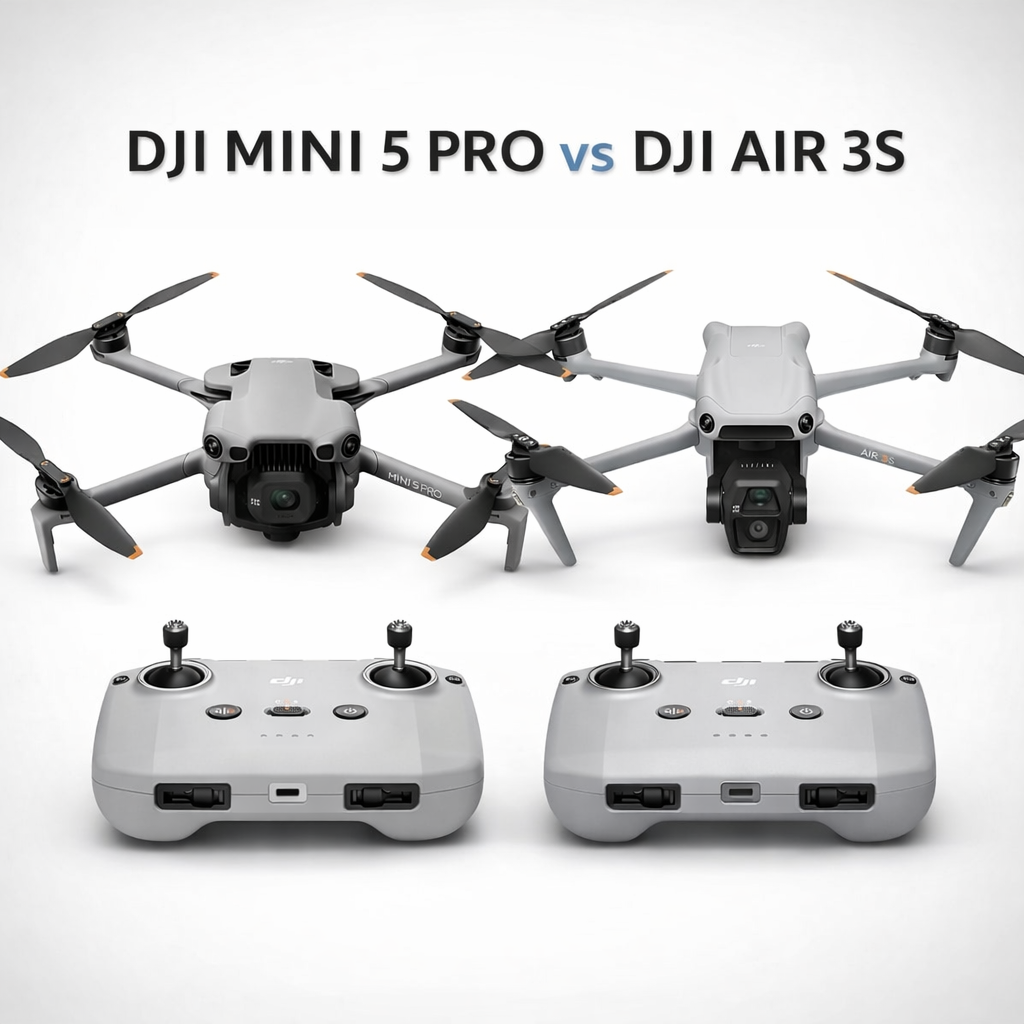
DJI Mini 5 Pro vs Air 3S is less about finding a single winner and more about deciding what kind of drone you actually want to carry.
The Mini 5 Pro is built around the magic 249g class, compact dimensions and a one-inch camera sensor. The Air 3S is much heavier at around 724g, but gains a dual-camera system, stronger physical presence in the air and a medium-telephoto camera that changes the way you can frame a scene.
The Key Difference: Size
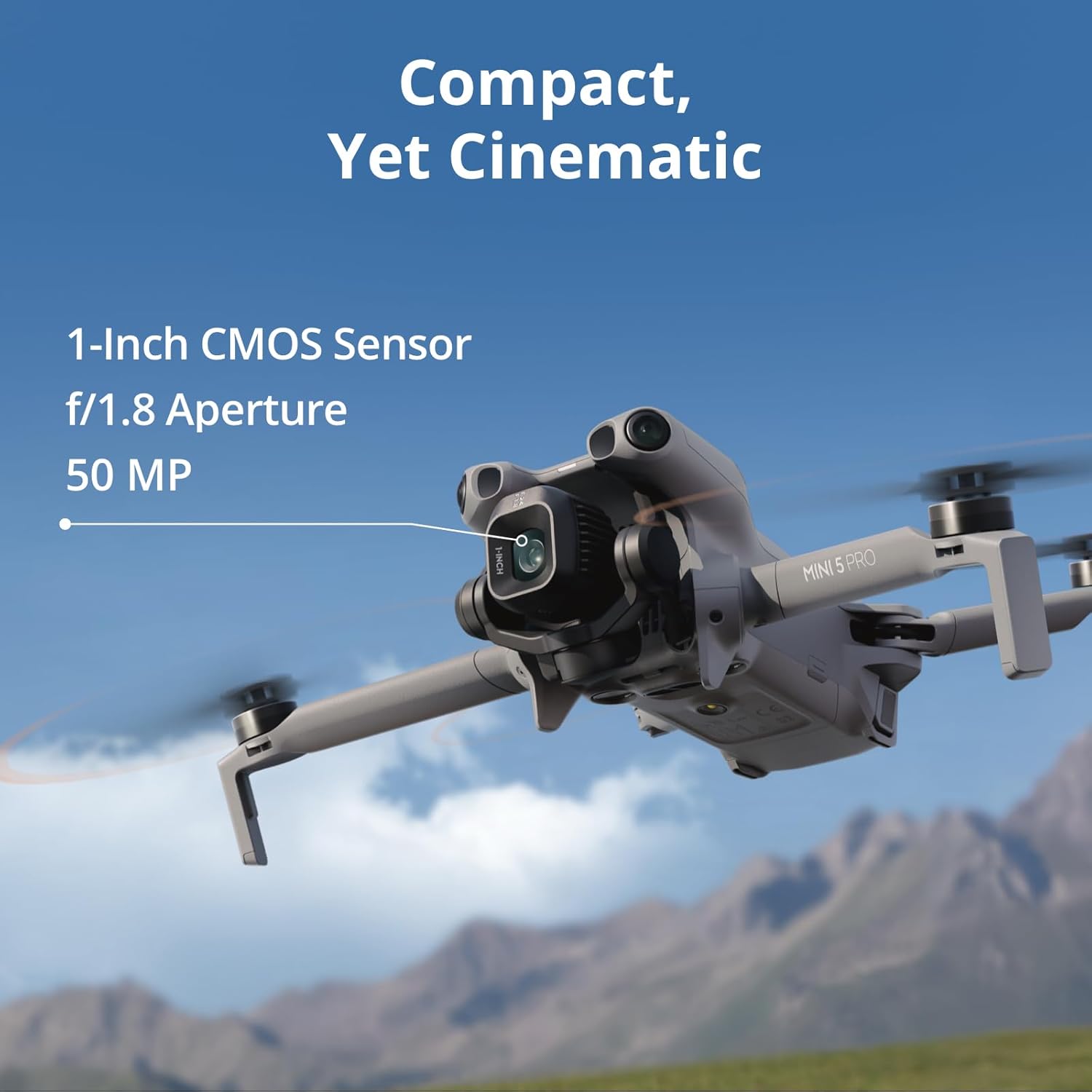
The Mini 5 Pro’s greatest advantage is obvious before it even leaves the ground. At around 249g in its standard configuration, it is significantly easier to pack and carry.
Drone regulations vary by country, but sub-250g aircraft often fall into less demanding categories than heavier drones. Pilots still need to understand local rules, registration requirements and no-fly zones, but weight can materially change the administrative burden.

The Air 3S is a larger aircraft. That adds weight to your bag, yet also gives the drone more physical stability and room for additional camera hardware.
Camera Systems
Both drones use a one-inch main camera sensor in current DJI specifications, which is a major reason the Mini 5 Pro is so interesting. DJI lists a 50MP maximum resolution and support for high-quality 4K recording.
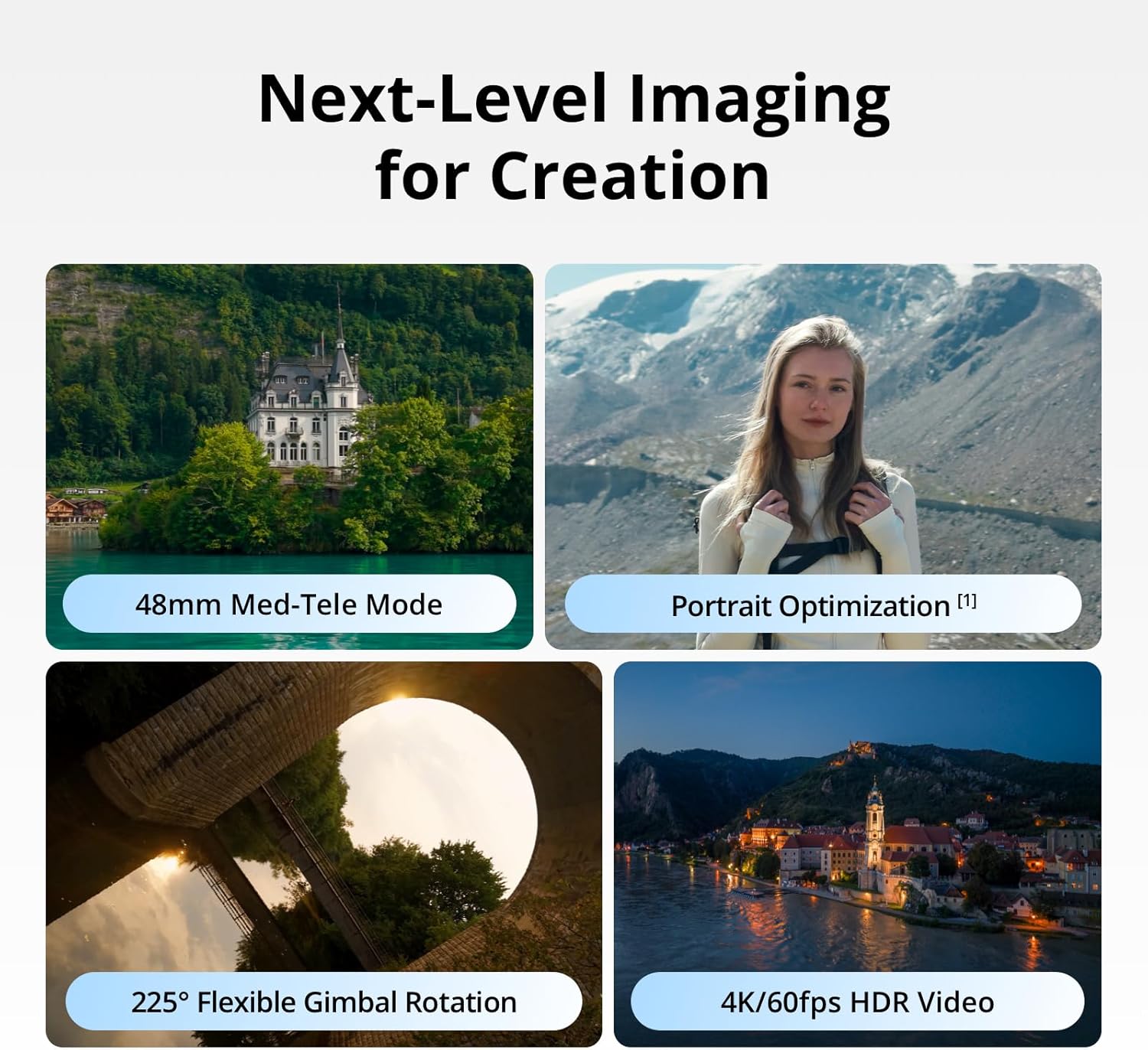
The Air 3S adds a second 1/1.3-inch medium-telephoto camera. This is the difference that matters to serious creators.

A telephoto lens lets you compress perspective, isolate subjects and capture distant details without relying entirely on digital cropping. Landscapes, cars, buildings and people can look very different when shot from a longer focal length.
If you usually publish wide aerial establishing shots, the Mini’s single main camera may be all you need. If you want more visual variety during one flight, the Air 3S is the stronger tool.
Flight Time
DJI rates the Air 3S for up to 45 minutes under its controlled test conditions.
Mini 5 Pro flight time depends on battery configuration and region. Longer-life batteries can increase endurance but may also push the aircraft above the 249g category, which can change regulatory treatment.
Manufacturer flight-time numbers are best viewed as maximum laboratory-style figures. Wind, temperature, speed, hovering and safety reserves all reduce real-world usable time.
Obstacle Sensing and Night Flying
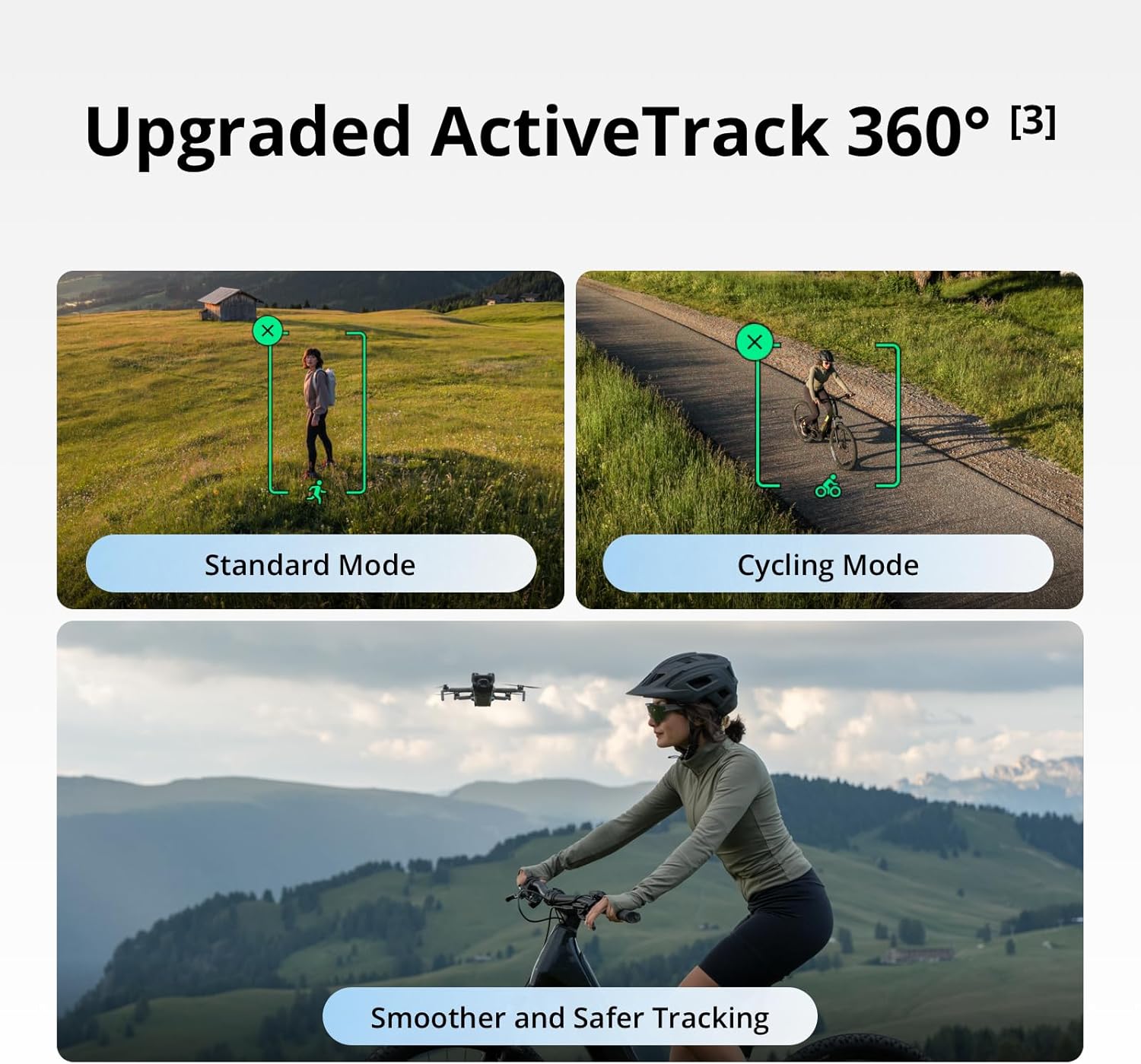
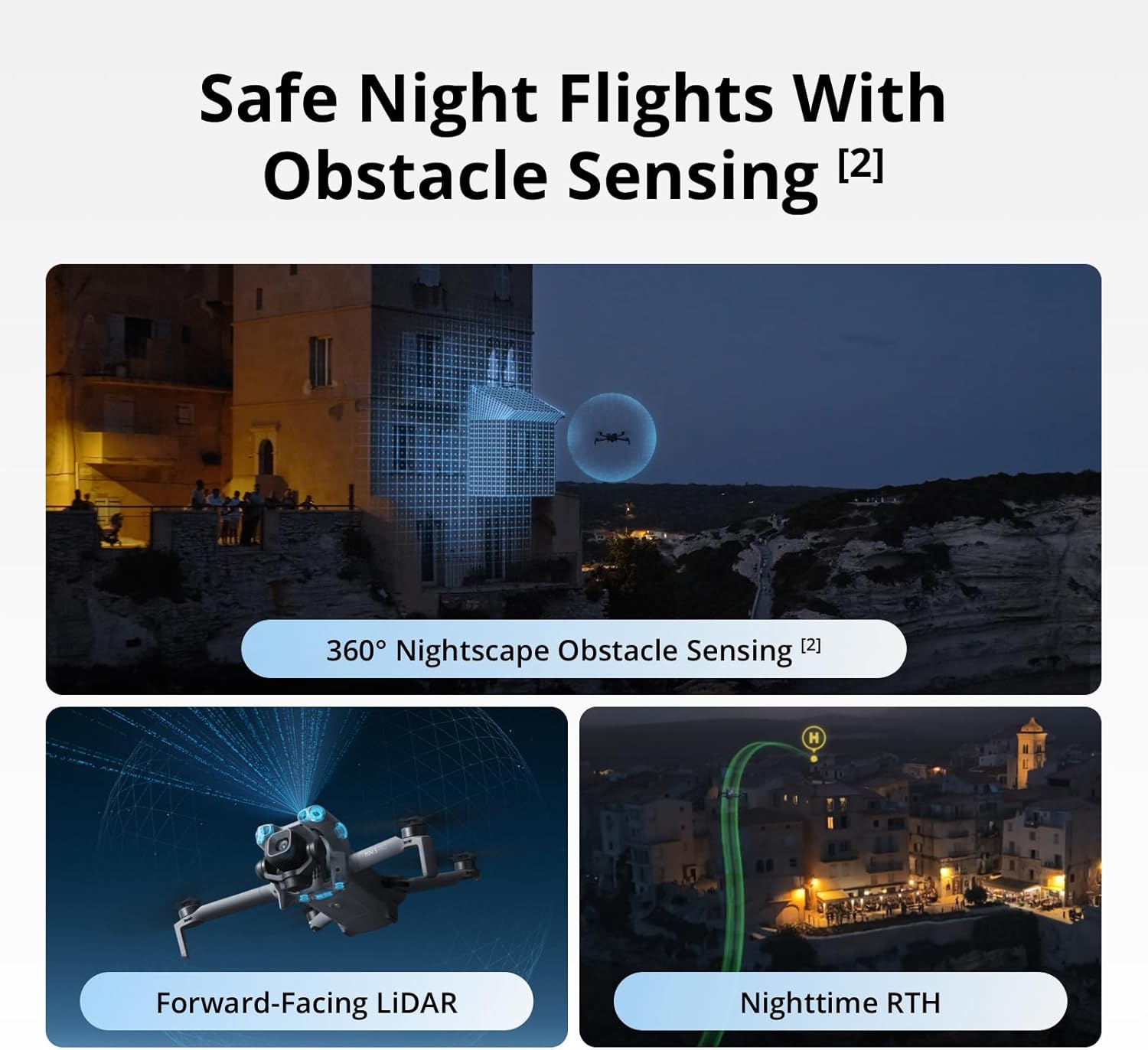
Both drones include sophisticated obstacle-sensing technology. DJI also markets nightscape obstacle sensing, which is increasingly important as camera drones become more capable in low light.

Obstacle sensing is a safety aid, not permission to fly carelessly. Thin branches, wires, low contrast surfaces and difficult lighting can still challenge automated systems.
Wind and Stability
A heavier drone generally feels calmer in stronger wind. Physics gives the Air 3S an advantage here.
The Mini 5 Pro remains far more capable than its tiny size suggests, but a lightweight aircraft can be moved around more aggressively by gusts. Coastal shooting, mountain flying and exposed locations therefore favour the Air 3S when conditions become difficult.
Travel
For travel creators, the equation reverses.

A Mini 5 Pro, controller and spare batteries can fit into a relatively small bag. The aircraft is easier to bring on trips where drone use is only one part of the plan.
The Air 3S asks you to commit more luggage space, but rewards that commitment with the second camera and a more substantial platform.
Which Should You Buy?
Choose the Mini 5 Pro if:
- portability is your priority
- you travel frequently
- the 249g category matters in your region
- you mainly use one wide camera perspective
- you want strong image quality in the smallest practical package
Choose the Air 3S if:
- you want a second telephoto camera
- you fly in more demanding conditions
- maximum portability matters less
- you shoot commercial or cinematic work where focal-length choice is valuable
Final Verdict
The Mini 5 Pro is the more remarkable engineering achievement because it puts a large sensor and advanced flight technology into an aircraft around the 249g threshold.
The Air 3S is the more versatile camera system.
For travellers and casual creators, the Mini 5 Pro will often be the drone that actually gets carried. For filmmakers who want more control over composition and can accept the extra weight, the Air 3S remains the stronger creative tool.