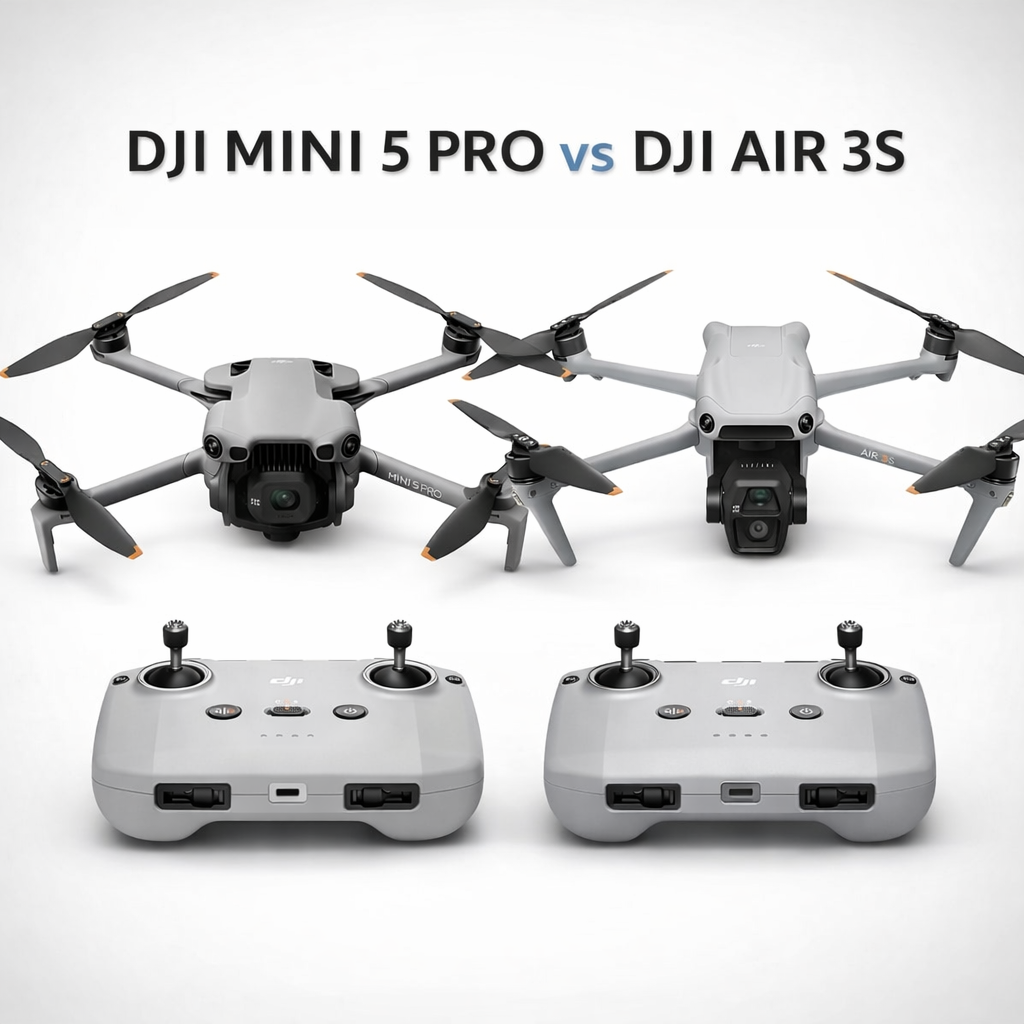
DJI Mini 5 Pro vs Air 3S is a comparison that highlights two very different design priorities within DJI’s drone lineup. One focuses on maximum portability and ease of everyday flying, while the other is built around camera versatility, stronger flight stability, and greater creative control. Both drones target serious users, but they are designed for very different types of pilots and shooting environments.
This article explores those differences in detail, covering design philosophy, camera systems, photography and video use, flight behavior, safety features, storage approach, and overall usability, without presenting one drone as universally better than the other.
Design philosophy and physical build
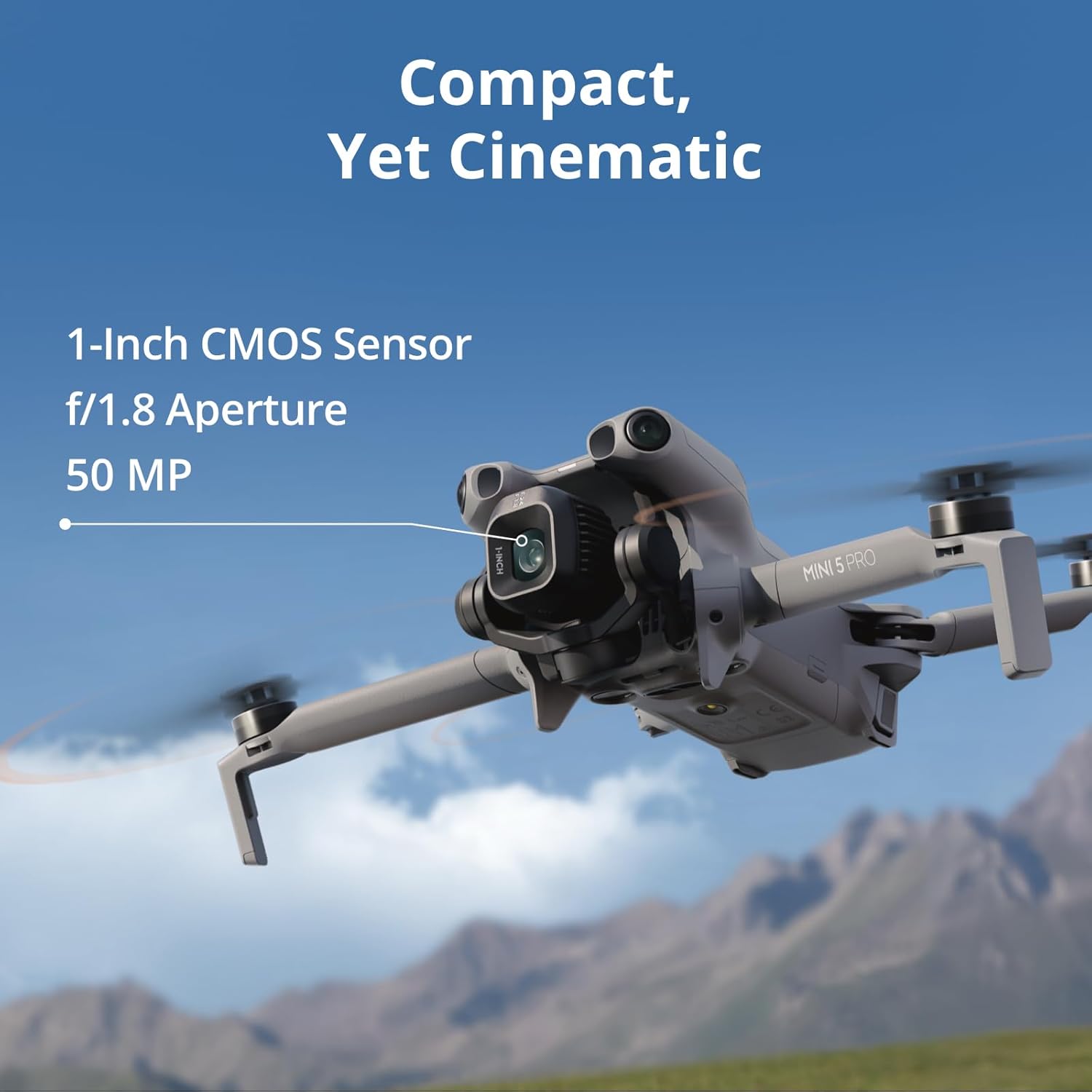
The DJI Mini 5 Pro is designed around compactness and lightweight construction. Its size and weight make it easy to carry daily, pack for travel, and deploy quickly without extensive setup. This design philosophy prioritizes convenience and accessibility, making the drone feel more like an everyday creative tool rather than specialized equipment.
The lightweight build influences how the Mini 5 Pro is used. It encourages short, frequent flights and spontaneous shooting opportunities. Its physical footprint makes it suitable for users who value portability over maximum hardware capability.
The DJI Air 3S follows a more traditional aerial camera platform approach. It uses a larger and heavier airframe that allows for more powerful motors, increased stability, and additional camera hardware. This design is aimed at pilots who plan flights deliberately and want a drone that feels solid and confident in a wider range of conditions.
The trade-off is portability. The Air 3S requires more space in a bag and more planning before flight, but it offers a more robust flying experience.

Camera systems and imaging approach
DJI Mini 5 Pro camera system
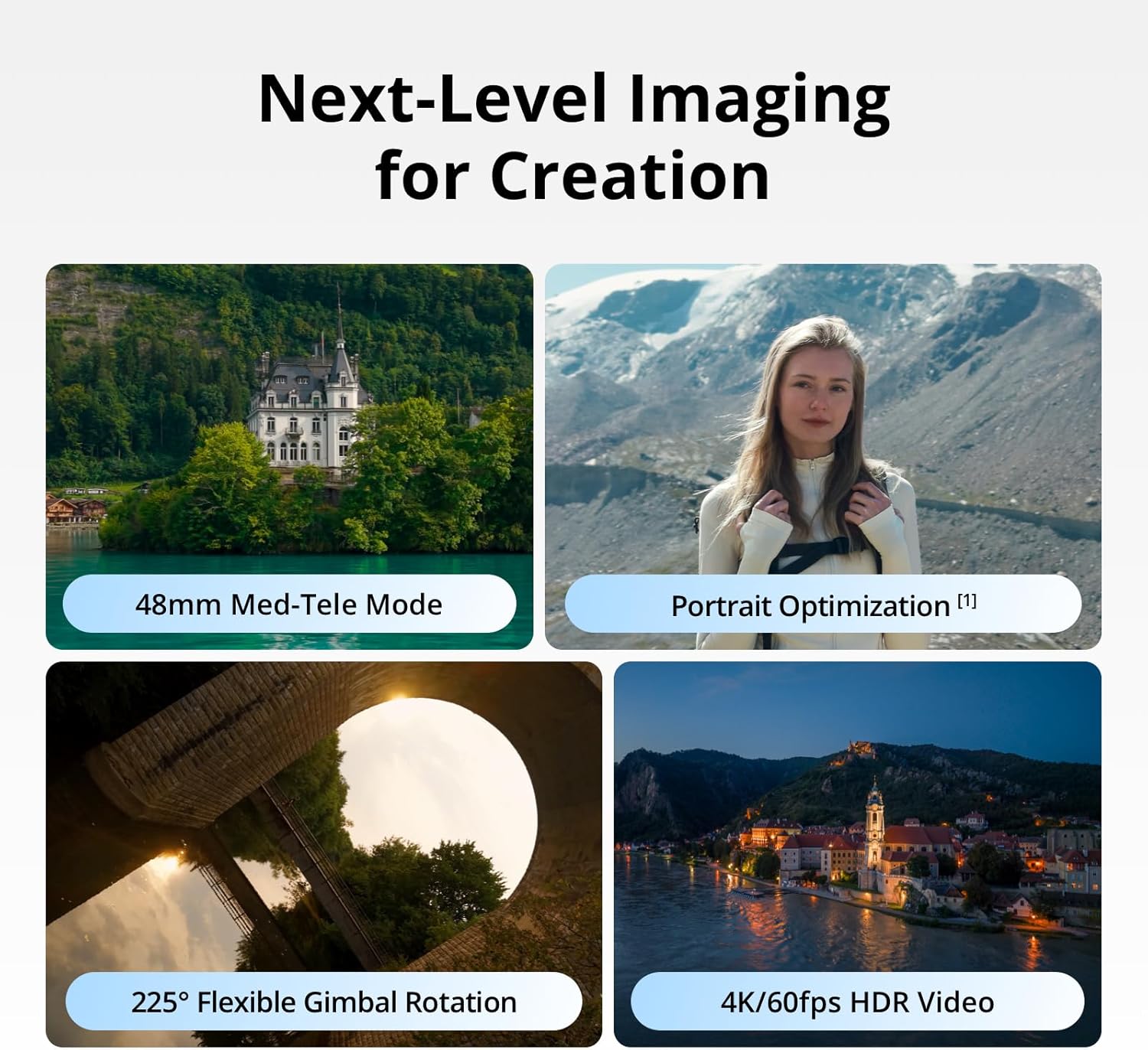
The Mini 5 Pro uses a single wide-angle camera designed to deliver strong image quality within strict size and weight limits. This camera is intended to handle general aerial photography and video tasks such as landscapes, city shots, and cinematic movement.
The imaging system emphasizes efficiency and balance rather than complexity. It supports advanced photo and video workflows suitable for editing, but composition relies on a single focal length. Framing decisions are achieved by repositioning the drone or using digital zoom when necessary.
This approach keeps the drone simple and lightweight, but it naturally limits creative framing options compared to multi-camera platforms.
DJI Air 3S camera system
The Air 3S features a dual-camera configuration. One camera is designed for wide-angle coverage, while the second offers a tighter perspective for more focused compositions. This allows pilots to switch viewpoints during flight without moving the drone closer to the subject.
This design significantly expands creative flexibility. Wide scenes, compressed landscapes, and subject-focused shots can all be captured in a single flight. For photographers and videographers, this reduces the need for heavy cropping and allows more intentional composition in the air.

Photography experience and output
Both drones are capable of producing high-quality still images suitable for editing and publishing.
The Mini 5 Pro delivers strong photographic results relative to its size. It is well suited for travel photography, casual commercial work, and content creation where portability is a priority. The single-camera design encourages thoughtful positioning and movement to achieve desired compositions.
The Air 3S offers a more versatile photography experience. The ability to choose between two perspectives allows photographers to adapt to changing scenes quickly. This is particularly useful for landscape photography, where different focal lengths can dramatically change the visual impact of an image.
Video recording and cinematic use
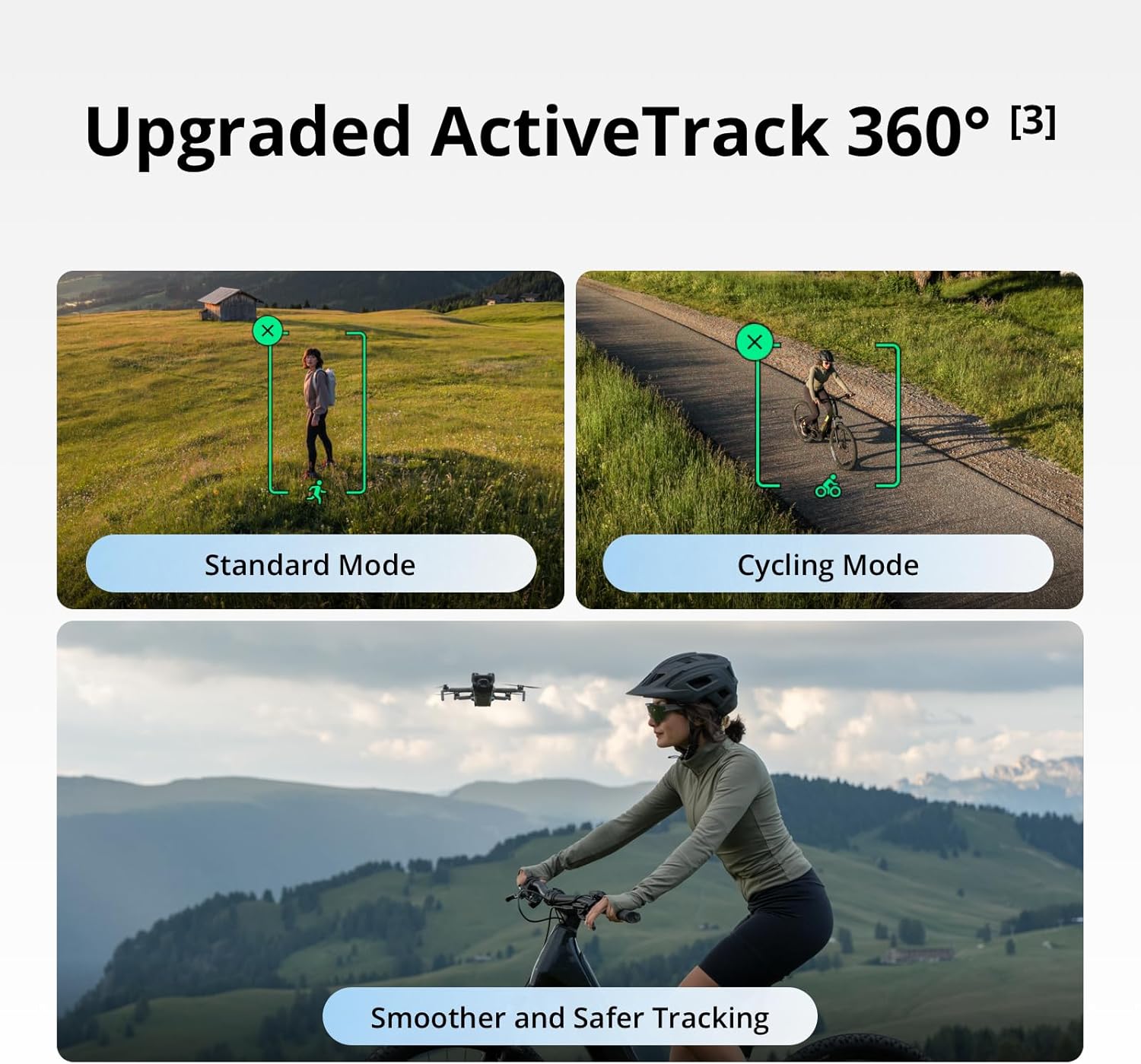
The Mini 5 Pro is optimized for efficient video capture. Its compact body and stabilized camera system make it ideal for smooth aerial movement, short cinematic clips, and everyday video content. It fits well into lightweight production workflows where speed and simplicity matter.
The Air 3S supports more complex video work. Its larger airframe provides consistent performance during longer recording sessions, and the dual-camera setup enables varied shot selection during a single flight. This makes it suitable for cinematic storytelling, commercial video production, and structured filming scenarios.

Flight behavior and handling
The Mini 5 Pro feels agile and responsive in the air. It performs best in calm to moderate conditions and is easy to control for casual flying. Due to its lightweight construction, it can be more affected by wind in exposed environments.
The Air 3S offers a more stable and grounded flight experience. Its additional mass and motor power allow it to hold position more confidently in wind and maintain smoother movement during precise maneuvers. This stability is valuable for controlled shooting and demanding locations.
Safety features and obstacle awareness
Both drones include modern safety and assistance features designed to reduce the risk of collisions and improve confidence during flight.
The Mini 5 Pro integrates obstacle awareness suitable for its size class, supporting automated flight modes and assisted maneuvers.
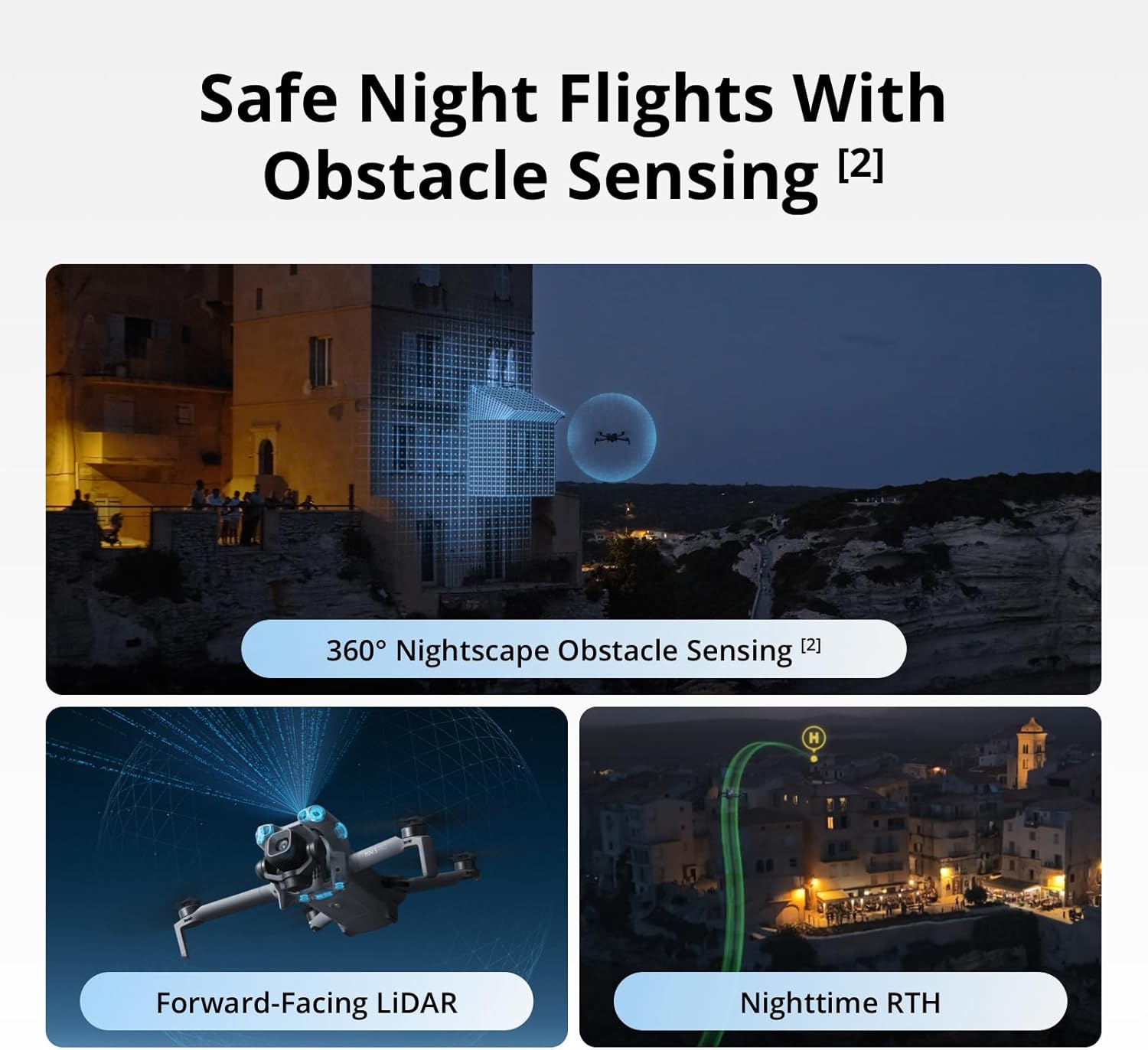
The Air 3S includes more robust safety systems designed to operate effectively at higher speeds and in more complex environments. Its larger platform allows for more conservative and predictable avoidance behavior.

Controllers, software, and user experience
Both drones operate within DJI’s current software ecosystem and use the same general control interface. Intelligent flight modes, automated shots, and assisted return-to-home functionality are available on both platforms.
The Mini 5 Pro emphasizes quick setup and ease of use, making it ideal for short sessions and spontaneous flights.
The Air 3S is better suited for longer flights and more deliberate shooting workflows, where pilots spend more time planning and executing each flight.
Storage and file handling
The Mini 5 Pro is designed with convenience in mind, supporting simplified file handling suitable for travel and casual use.
The Air 3S produces larger media files due to its expanded imaging capabilities. This makes organized storage and post-flight file management a more important part of the workflow.
Pros and cons
DJI Mini 5 Pro pros
- Extremely compact and easy to carry
- Fast setup and deployment
- Strong image quality for its size
- Designed for everyday flying
DJI Mini 5 Pro cons
- Single camera limits framing options
- More sensitive to wind
- Less suited to extended or complex shoots
DJI Air 3S pros
- Dual-camera system enables creative flexibility
- Strong stability and flight confidence
- Well suited for structured photo and video work
DJI Air 3S cons
- Larger and heavier to transport
- Requires more planning and setup
- Bigger overall gear footprint
Which drone suits different users
The DJI Mini 5 Pro is best suited for travelers, casual creators, and pilots who want a drone they can carry easily and fly often. It works well for lightweight photography, social media content, and spontaneous aerial shots.
The DJI Air 3S is better suited for photographers and videographers who prioritize framing options, stability, and creative control. It fits workflows that involve planning, longer flights, and more demanding shooting environments.
Final perspective
The DJI Mini 5 Pro and DJI Air 3S serve different roles within DJI’s lineup. The Mini 5 Pro focuses on accessibility and portability, while the Air 3S emphasizes versatility and performance.
Choosing between them depends on how you fly, what you shoot, and how much gear you want to carry. Both are capable drones when used within the roles they are designed for.
Where to Buy
DJI Mini 5 Pro
DJI AIR 3S
This post contains affiliate links. If you click on a link and make a purchase, I may earn a small commission at no extra cost to you. This helps support the site and allows me to continue creating helpful content. Thank you for your support.