
This post may contain affiliate links. If you buy something through one of these links, Tech Info Central may earn a small commission at no extra cost to you.
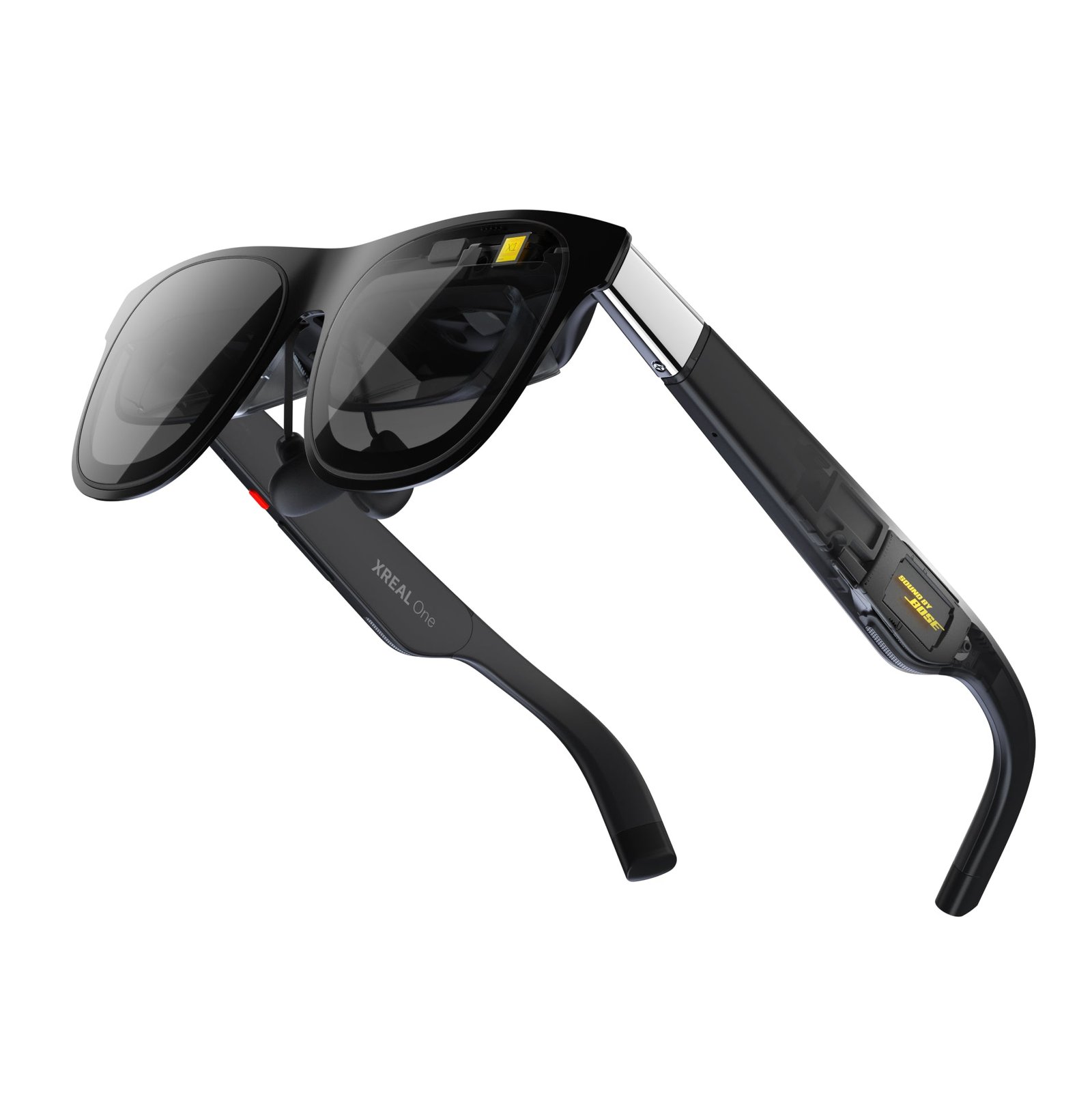
An XREAL One AR glasses review needs to separate two ideas that are often mixed together. These glasses can create a large private virtual display in front of your eyes, but they are not trying to replace a full spatial-computing headset such as Apple Vision Pro or Samsung Galaxy XR.
That narrower purpose is actually their strength.

What the XREAL One Does
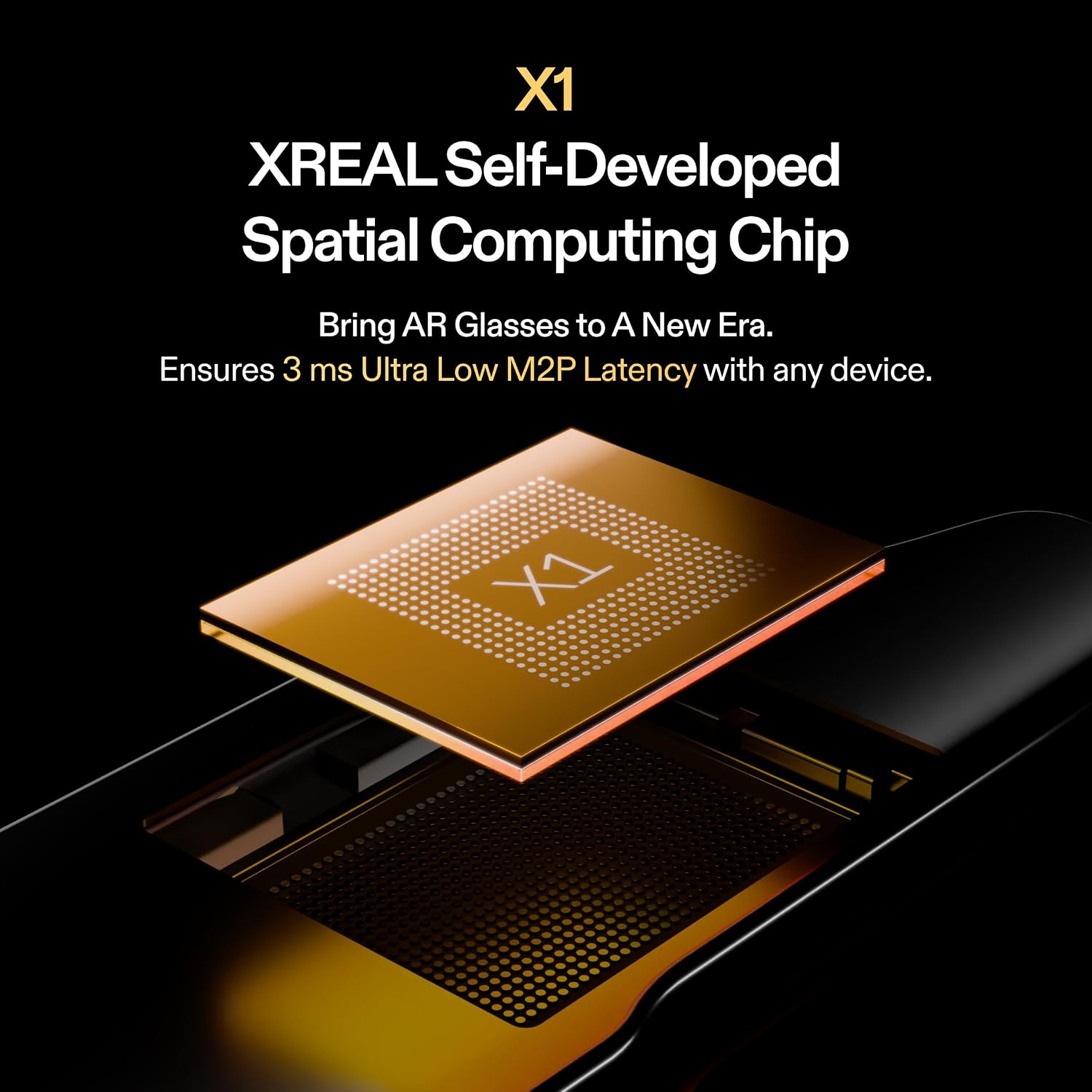
The XREAL One uses Sony micro-OLED displays with a 1920 x 1080 image and refresh rates up to 120Hz. XREAL’s own X1 chip handles display processing and 3DoF tracking directly in the glasses.
That means the virtual screen can stay anchored or respond to head movement without depending entirely on an external computing accessory.
The field of view is around 50 degrees, and XREAL lists perceived brightness up to 600 nits for the One model.
A Wearable Monitor Rather Than a Hologram Machine
The best way to understand the XREAL One is as a monitor you can wear.
Connect a compatible phone, handheld gaming PC, laptop or console and the glasses can display a large virtual screen. That is useful on flights, in hotel rooms or anywhere a normal monitor would be impractical.
You still see through the lenses, so the experience feels lighter and less isolating than a sealed VR headset.

3DoF Tracking
Three-degrees-of-freedom tracking means the system understands rotational head movement. You can look left, right, up or down while the virtual display remains positioned in space.
It does not provide the full room-scale movement and object interaction of a six-degrees-of-freedom mixed-reality headset.
For films, productivity and controller-based games, 3DoF is often enough. For room-scale AR, it is not.
Display Quality
Micro-OLED is well suited to wearable displays because it can produce deep blacks and high contrast in a very small panel.
The 1080p resolution is sharp enough for films and gaming, although desktop text at very small sizes may still remind you that this is not the same as sitting in front of a 4K monitor.
A 120Hz mode is valuable for gaming and smooth motion, assuming the connected source can output a compatible signal.

Comfort
At roughly 84g, the XREAL One is dramatically lighter than a full VR headset. It still weighs more than ordinary glasses, so long sessions can put pressure on the nose and ears depending on face shape.
XREAL includes electrochromic dimming modes that adjust how much outside light reaches your view. This can make the virtual display easier to see without requiring a bulky external light shield.
Audio
The glasses include integrated open audio tuned in partnership with Bose. That keeps the ears uncovered and makes the system convenient for travel.
Open speakers also mean nearby people may hear some sound at higher volume. Earbuds remain preferable when privacy matters.
Compatibility Is Crucial
Before buying, check the device you want to connect.
USB-C video output is not supported by every phone, tablet or laptop. Some consoles and devices may require an adapter or additional XREAL hardware.
The glasses are much less useful if your main device cannot provide a straightforward video signal.
Pros
- Lightweight compared with VR headsets
- 1080p micro-OLED display
- Up to 120Hz refresh rate
- X1 chip handles 3DoF processing
- Excellent for travel entertainment
- Useful with handheld gaming PCs
- Adjustable lens dimming
Cons
- Not full room-scale augmented reality
- Device compatibility must be checked carefully
- Long sessions may still cause pressure or eye fatigue
- Text productivity is more demanding than film viewing
Buy Now on Amazon
Secure checkout and fast delivery.
Final Verdict
The XREAL One is strongest when judged as a portable display rather than a futuristic AR computer.
It can give a laptop, phone or gaming handheld a much larger private screen without requiring a monitor or television. That is genuinely useful for travel and small spaces.
Buy it for films, gaming and portable display freedom. If you want persistent spatial apps mapped around a room, you need a different class of headset.