
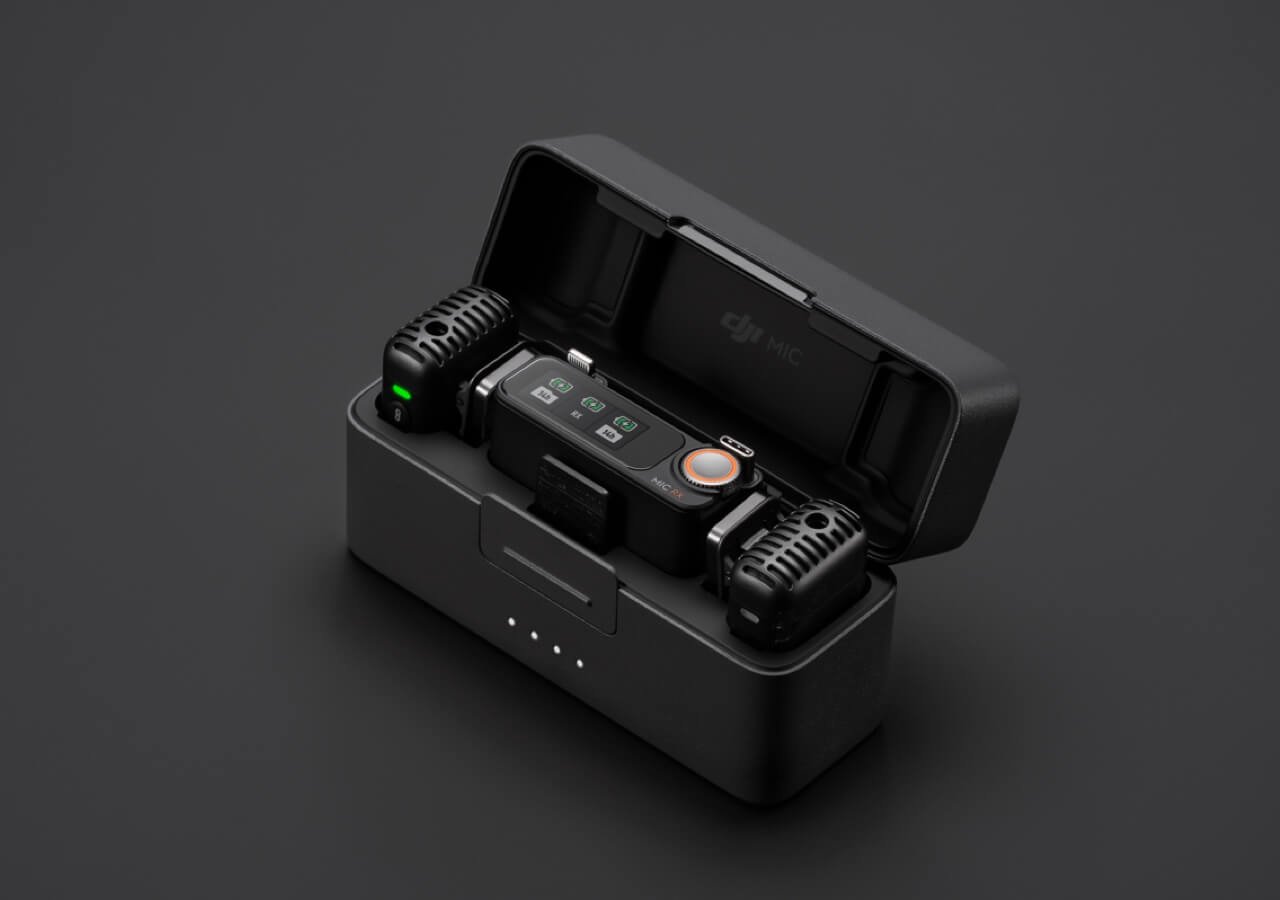
The DJI Mic 2 is a wireless microphone system for recording speech to a camera, phone or computer, with a separate recording stored on each transmitter when enabled. Its main attraction is that backup: if the wireless feed drops out, you may still have audio to recover in the edit. This DJI Mic 2 review explains the published capabilities and buying compromises, including the limits of 32-bit float recording.
This post contains affiliate links. If you click on a link and make a purchase, I may earn a small commission at no extra cost to you. This helps support the blog and allows me to continue providing content. Thank you for your support!
This is a research-based assessment using DJI documentation, not a report of hands-on testing. The practical question is whether you need a receiver and local backup files, or whether a simpler microphone already covers your work. Compatibility, the exact kit contents and your editing routine matter more than the longest advertised range.
Quick Specs Overview
The figures below come from DJI specifications. Battery and range figures are manufacturer test results, not guarantees for every location or recording mode.
- Transmitters (TX):
- Dimensions: 46.06×30.96×21.83 mm
- Weight: 28 g
- Wireless Mode: GFSK 1 Mbps and 2 Mbps
- Battery: 360 mAh, 6 hours operating time
- Internal Storage: 8 GB (up to 14 hours of 24-bit audio)
- Recording: 24-bit/48kHz, 32-bit float internal recording
- Receiver (RX):
- Dimensions: 54.20×28.36×22.49 mm
- Weight: 28 g
- Wireless Mode: GFSK 1 Mbps and 2Mbps
- Battery: 360 mAh, 6 hours operating time
- Screen: 1.1-inch OLED touchscreen with control dial
- Charging Case:
- Dimensions: 116×41.5×59.72 mm
- Weight: 200 g
- Battery: 3250 mAh
- Total Operating Time: Up to 18 hours with the case
- General:
- Transmission Range: Up to 250 m (FCC) or 160 m (CE), unobstructed and without interference
- Polar Pattern: Omnidirectional
- Max Sound Pressure Level (SPL): 120 dB SPL
- Connectivity: USB-C, Lightning, 3.5mm TRS

Design & Build Quality
The charging-case kit holds two transmitters and a receiver together, with a latch to keep the case closed in a bag. That reduces the number of loose pieces to charge and pack. It is worth distinguishing this kit from the single-transmitter package: a lower advertised price may mean fewer components rather than a discount on the same set.
Shadow Black and Pearl White transmitters are available, with a translucent finish on the black version. Colour can help a microphone blend into clothing, but position should come first. Keep the microphone clear of collars, jewellery and loose fabric that could rub against it. A small visible transmitter is preferable to a hidden one producing unusable rustling.
The separate recording and power controls are useful because switching on a transmitter and starting its local recording are different actions. Make checking the recording indicator part of your setup, particularly when relying on an internal file as insurance against a radio dropout.
The receiver combines a 1.1-inch OLED touchscreen with a control dial. Having levels and settings on the receiver helps when the camera is fixed on a tripod, but a moving meter only confirms that a signal is arriving. Listen to a short test through headphones to check for clothing noise, distortion and an unexpectedly distant voice.
The receiver can sit on a camera shoe, but that mounting point does not itself establish an audio connection. Use the appropriate cable or phone adapter, and check what is included in the specific package. Do not assume every camera or phone works simply because it has a similar-looking socket.
For a two-person interview, the extra transmitter is the important purchase. For a solo presenter, carrying unused hardware adds cost and charging tasks. Choose around the number of people you normally record rather than buying the largest bundle by default.
Performance & Features
The distinction to keep in mind is between the audio reaching your camera and the file recorded inside the transmitter. They serve different purposes, and a backup only helps if you have enabled it and can retrieve it afterwards.
What 32-bit Float Recording Can and Cannot Fix
An omnidirectional microphone captures sound around it, so placing it close to the speaker helps the voice stand out from the room. It does not selectively hear only the person wearing it. Before recording, ask for a sentence at normal speaking volume and a louder one, then listen for the balance between speech and background sound.
The 32-bit float internal recording gives you room to adjust file levels in compatible editing software. It does not make the whole audio chain immune to distortion: an overloaded microphone, wind, rubbing clothes or a clipped camera input cannot be assumed recoverable. Nor does the feature turn the camera track into a 32-bit float file. The transmitter stores that recording separately. DJI lists up to 14 hours of 24-bit audio or 11 hours of 32-bit float audio in its 8 GB storage. Export and check important files before clearing space for another shoot.

Intelligent Noise Cancelling
Intelligent noise cancelling is intended to reduce background noise around speech. Treat it as an option to compare, rather than a setting to enable automatically. Record the same sentence with it on and off in your location, then decide whether the reduction in noise is worth any change to the voice.
Use a windscreen outdoors and move away from avoidable noise before depending on processing. A nearby fan or busy doorway is often easier to address at the location than in an edit. DJI specifically disables noise cancelling and internal recording when the transmitter connects to a smartphone over Bluetooth; that limitation should not be generalised to every supported DJI camera connection.
Range and Wireless Dropouts
The quoted maximum is 250 metres under FCC conditions and 160 metres under CE conditions, measured without obstacles or interference. Neither figure is a sensible target for an unrepeatable interview. Keep the receiver within a practical distance, avoid blocking the path with bodies or walls, and test the route if the presenter will move during the shot.
Local recording protects against a missing wireless feed only when it is actually running. It also creates work later: you must transfer the file, match it to the picture and check synchronisation. For a live stream, an internal backup cannot repair what the audience has already heard, so monitor the live connection.
Battery Life and Charging Breaks
DJI quotes six hours for the transmitters and receiver, with up to 18 hours in total using the charging case. Its six-hour test excludes internal backup recording. The case figure includes recharging between uses; it is not an uninterrupted 18-hour take. DJI lists about 70 minutes to charge the units and two hours 40 minutes for the case. Build charging breaks into a long shooting day rather than planning around the maximum.

Setting Up a Recording
A repeatable setup is more valuable than a promise of instant results. Before an important recording, check charge, available storage, the connection to the camera or app, and whether you need a separate channel for each speaker.
Pairing and Channel Checks
The case can link the transmitters and receiver, reducing pairing work. Once linked, confirm both transmitters appear on the receiver and that each speaker reaches the intended channel. A quick spoken identification at the start of each take can make the files easier to organise later.
Versatile Connectivity
USB-C and Lightning adapters serve compatible phones, while the 3.5 mm TRS cable connects to a suitable camera microphone input. Check phone-case clearance and the exact recording app before a shoot. The receiver has a headphone monitoring output, but also play back a camera test clip: hearing sound at the receiver does not prove that the camera recorded it correctly.
Direct Bluetooth Connection
Direct connection to supported DJI devices, including Osmo Pocket 3 and Osmo Action 4, can remove the receiver from the setup. Smartphone Bluetooth is a separate case, with app compatibility and the feature restrictions noted above. Consult DJI’s connection and recording FAQ for the intended device. If internal backup is a reason you are buying, verify that your chosen connection mode supports it.
Ideal for a Range of Creators
Different recording jobs place different demands on the kit:
- Vloggers: A transmitter worn close to the voice can suit moving presentations; check rubbing and wind before the take.
- Filmmakers: Internal recording provides a separate file for the edit, provided it is enabled and transferred afterwards.
- Journalists and Interviewers: A two-transmitter kit lets you mic both participants. Check channel separation before starting.
- Live Streamers: Headphone monitoring matters because a local file cannot fix a dropout for viewers watching live.

Pros and Cons
The useful strengths are practical features rather than a promise that every recording will sound good:
Pros
- Exceptional Audio Quality: Close microphone placement can improve the balance of speech against room noise.
- 32-bit Float Internal Recording: More flexibility when adjusting the separate transmitter file in an editor.
- Effective Intelligent Noise Cancelling: An optional way to reduce background noise, best checked against an unprocessed sample.
- Premium Design and Build Quality: A latched case keeps the units together during transport.
- Intuitive and User-Friendly: Receiver screen and dial keep settings accessible without relying on a phone app.
- Excellent Battery Life: The case adds recharges for longer days, rather than continuous 18-hour operation.
- Versatile Connectivity: Camera cables, phone adapters and supported direct connections cover different recording setups.
- Sleek and Functional Charging Case: Combines storage, linking and charging in the kit that includes it.
Cons
- Fingerprint-Prone Transmitter Finish: A visible transmitter may not suit every shot; plan placement around both sound and appearance.
- No Internal Recording via Bluetooth: Smartphone Bluetooth disables internal recording and noise cancelling; verify the exact connection mode.
- Price: Compare complete kits and stock availability. Buying an extra receiver or transmitter later changes the total.
Kit Prices and Availability
When checked for this update, the DJI US store listed the two-transmitter kit with receiver and charging case at $199, but marked it out of stock. A listed price is not a confirmed buying opportunity. Compare local availability, tax, warranty and the exact contents before choosing a retailer.
The same US store also listed these configurations, marked out of stock at the time of checking:
- DJI Mic 2 (1 TX + 1 RX): $129 USD; one speaker and a receiver
- DJI Mic 2 Transmitter (standalone): $59 USD; receiver not included
A standalone transmitter is not a complete camera kit unless your camera supports a direct connection. If you already own the original DJI Mic, note that its transmitters and receiver cannot be mixed with Mic 2 units. Factor in the cost of a complete compatible system when considering an upgrade.
Alternatives
Compare alternatives around the job that needs doing. These are useful comparison questions, not a claim that each system has the same capabilities:
- Rode Wireless PRO: Compare its recording and post-production workflow with the files and accessories you need.
- Hollyland Lark M2: Consider whether a smaller wearable microphone matters more to you than the Mic 2 backup workflow.
- Sennheiser Profile Wireless: Compare the package contents, mounting options and current price for your camera setup.
When the Mic 2 Makes Sense
The strongest reason to choose the Mic 2 is a workflow that benefits from wireless camera audio and a local file you can use later. Two-person interviews, moving presenters and videos that cannot easily be reshot make that separation useful. It still depends on checking placement, enabling recording and monitoring the result.
If you already get dependable audio from the original Mic, upgrade for a specific feature such as 32-bit float internal files or a supported direct camera connection. A new recording format alone will not improve microphone placement or remove room echo.
Skip the larger kit if you only record one person, rarely edit, or only need occasional desk narration. If the aim is searchable meeting notes rather than an audio track for video, our Plaud NotePin S review explains a different approach, including its cloud processing and subscription limits.
For video work, decide how you will use the backup before paying for it. Our Wondershare Filmora review covers the editing side of a creator setup; check your own editor’s support for the files and audio workflow you intend to use. The Mic 2 is worth considering when those features solve a real problem at an available price, rather than simply adding another device to the bag.
Buy DJI Mic 2 on Amazon
Choose your region to check the current price, seller and delivery options.