
This post may contain affiliate links. If you buy something through one of these links, Tech Info Central may earn a small commission at no extra cost to you.
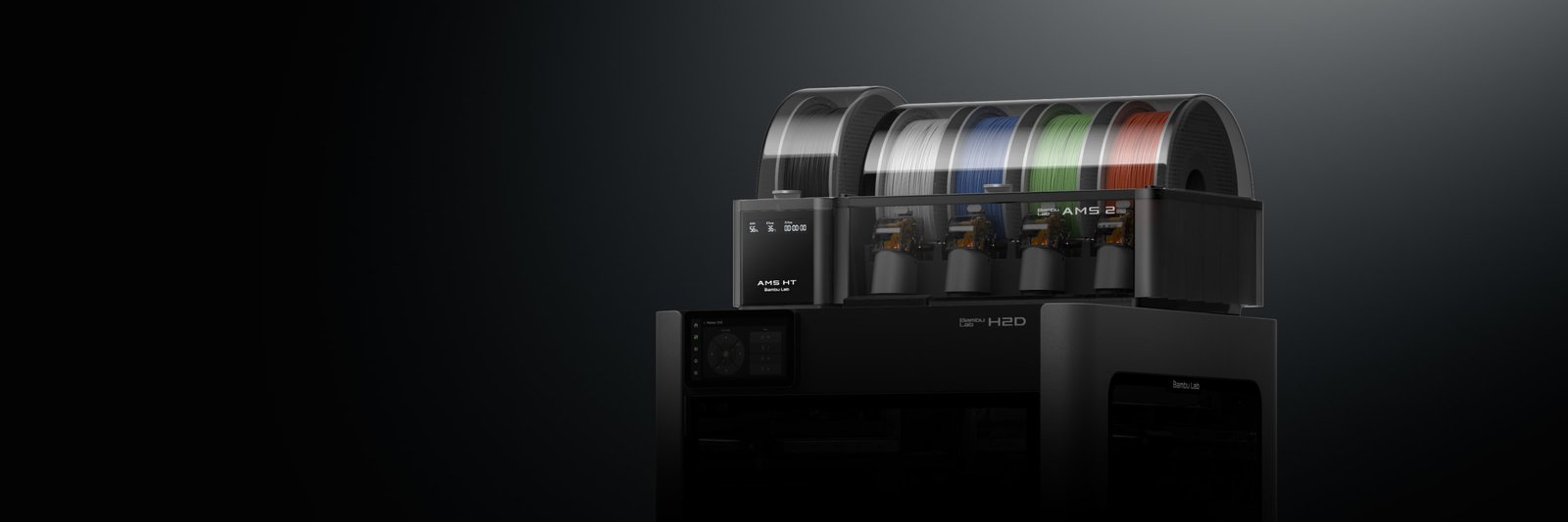
Bambu Lab H2D review buyers should approach this machine as a premium fabrication platform rather than simply a faster version of an entry-level 3D printer.
The H2D was designed around a larger enclosed build area, dual-nozzle printing, extensive automation and optional tool modules that push the machine towards a small workshop rather than a basic desktop printer.
That capability is exciting, but it also makes the purchasing decision more complicated.
Bambu Lab H2D Key Features
| Feature | Details |
|---|---|
| Printer type | Enclosed FDM 3D printer |
| Extrusion | Dual-nozzle system |
| Build area | Larger than Bambu’s earlier desktop models, exact usable area depends on print mode |
| Multi-material | Compatible with Bambu AMS ecosystem options |
| Calibration | Automated calibration and monitoring features |
| Enclosure | Fully enclosed chamber |
| Connectivity | Networked workflow through Bambu software ecosystem |
| Optional functions | Laser/cutting capabilities on supported H2D configurations and modules |
Dual Nozzles Solve a Real Multi-Material Problem
Multi-colour systems that feed several filaments through one nozzle can waste material each time the printer purges one colour before loading another.
The H2D’s dual-nozzle architecture creates additional options. Different materials or support interfaces can remain assigned to separate nozzles, potentially reducing some of the purge waste and time involved in repeated swapping.
It does not eliminate every complication of multi-material printing, but it expands what the machine can do efficiently.

Size Makes the H2D More Useful
The larger build area is important for helmets, prototypes, enclosures and functional parts that would need to be split across several plates on a smaller printer.
A larger printer also requires more physical space. Measure the desk, cabinet or workshop location before purchase and leave room for filament systems, doors, cables and maintenance access.
Automation Is a Major Part of the Appeal
Bambu Lab built its reputation partly around removing setup friction from consumer FDM printing.
The H2D continues that approach with automated calibration, monitoring and software-assisted workflows.
Automation does not mean zero maintenance. Nozzles wear, build surfaces need cleaning, filament absorbs moisture and failed prints still happen.
What changes is how much repetitive calibration the printer can handle for you.
The Multi-Tool Ambition
Certain H2D packages extend beyond filament printing with optional laser and cutting capabilities.
That sounds like having several workshop machines in one enclosure, but buyers need to take safety seriously. Laser modules require correct ventilation, compatible materials and appropriate procedures.
Do not treat optional laser functions as a casual extra simply because the hardware integrates neatly with the printer.


Software and Ecosystem
The H2D works best as part of Bambu Lab’s broader hardware and software ecosystem.
That integration is convenient. Profiles, material handling, AMS management and remote monitoring can all work together smoothly.
The trade-off is greater dependence on one manufacturer’s ecosystem than with a completely open DIY printer.
Who Should Buy the H2D?
The H2D makes most sense for serious hobbyists, small design studios, prototype work and users who know they will benefit from dual materials, a larger build volume or optional fabrication modules.
A beginner who prints small PLA models occasionally can buy a far cheaper machine and still get excellent results.
Pros
- Dual-nozzle flexibility
- Large enclosed build area
- Strong automation
- Multi-material ecosystem
- Suitable for more demanding materials and projects
- Optional workshop-style expansion on selected packages
Cons
- Expensive
- Large physical footprint
- More machine than many beginners need
- Greater ecosystem dependence
- Optional laser features add safety and ventilation requirements
Final Verdict
The Bambu Lab H2D is impressive because it tries to make advanced fabrication easier, not because it is simply fast.
Dual nozzles, a large build space and deep automation can save time for people who regularly make complex parts.
If your projects genuinely need those capabilities, the price is easier to justify. If you mainly print small single-colour models, much cheaper Bambu machines will get you surprisingly close to the same everyday convenience.