
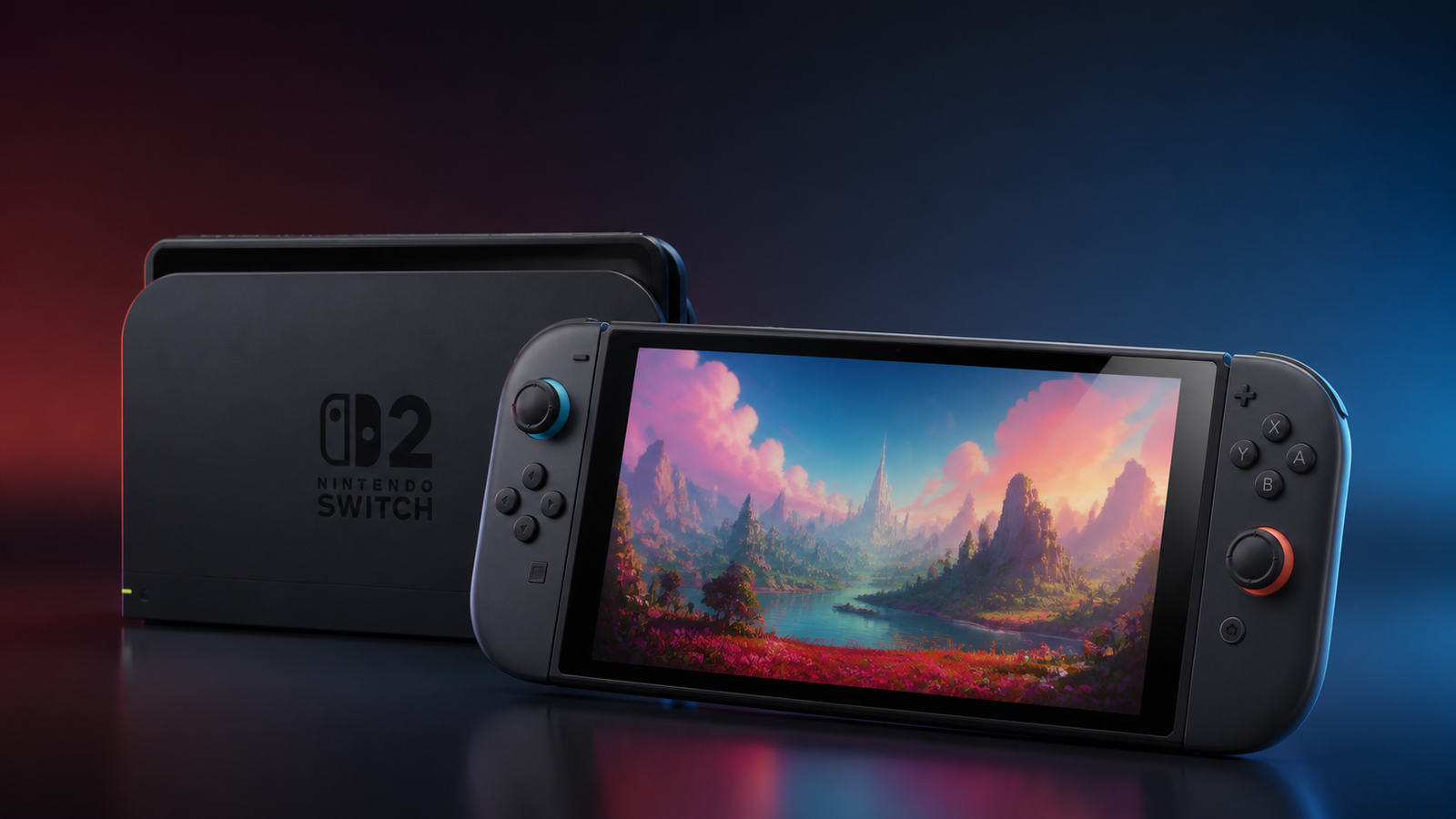
Nintendo is increasing the price of the Switch 2 in several major markets. The change makes the console more expensive just over a year after its June 2025 launch.
In the United States, the price will rise from $449.99 to $499.99 on September 1, 2026. That is a $50 increase, or approximately 11 percent. Canada, Europe, Australia, and New Zealand will receive increases on the same date. The new price has already taken effect in Japan.
The timing is notable because consoles have traditionally become cheaper as they age. Nintendo says rising component costs, currency movements, oil prices, tariffs, and other market pressures have made the original Switch 2 price difficult to maintain.
Here is a closer look at what is changing, why Nintendo made the decision, and what the increase means for prospective buyers.
This post may contain affiliate links. As an Amazon Associate I earn from qualifying purchases at no additional cost to you.
How much will the Nintendo Switch 2 cost?
The size of the Nintendo Switch 2 price increase varies considerably by market.
| Market | Previous price | New price | Approximate increase | Effective date |
|---|---|---|---|---|
| United States | $449.99 | $499.99 | 11.1% | September 1, 2026 |
| Canada | CA$629.99 | CA$679.99 | 7.9% | September 1, 2026 |
| Europe | €469.99 | €499.99 | 6.4% | September 1, 2026 |
| Japan | ¥49,980 | ¥59,980 | 20% | May 25, 2026 |
| Australia | AU$699.95 | AU$769.95 | 10% | September 1, 2026 |
| New Zealand | NZ$799.95 | NZ$969.95 | 21.3% | September 1, 2026 |
The European figures are My Nintendo Store prices and include tax. The American and Canadian prices do not include sales tax.
Nintendo has not published every local price. Pricing for Latin America and certain European currencies is expected to be announced separately.
The company confirmed the American, Canadian, European, and Japanese prices in its global price revision announcement. Nintendo Australia separately confirmed the new prices for Australia and New Zealand.
The Japanese increase applies to the domestic Japanese-language Switch 2. Nintendo says the multi-language model sold through the Japanese My Nintendo Store will remain at its current price.
Why is Nintendo increasing the Switch 2 price?
Nintendo initially described the decision as a response to changing market conditions and its global business outlook. Company president Shuntaro Furukawa later provided a more detailed explanation during a financial results briefing.
According to Furukawa, no single expense caused the increase. Nintendo expects several financial pressures to continue over the medium to long term. These include:
- Higher memory chip prices
- Rising costs for other hardware components
- Foreign exchange movements
- Oil price trends
- Tariff-related expenses
- Different economic conditions in individual regions
Console manufacturers usually benefit from falling production costs as hardware gets older. Components become easier to obtain, factories become more efficient, and companies gain opportunities to introduce cheaper models or reduce retail prices.
The Switch 2 is facing a different environment. Nintendo believes that keeping the former prices could significantly reduce hardware profitability. The company has therefore decided to pass part of its additional costs to consumers.
Nintendo’s financial forecast includes an estimated ¥100 billion impact from rising component prices and tariffs. Memory costs are a particularly important part of that calculation.
The company has not explained exactly how much of the retail increase comes from tariffs, memory prices, shipping, currency movements, or other costs. Its statements make clear that tariffs are only one part of a larger issue. Nintendo’s financial briefing also identifies component prices, foreign exchange rates, and oil prices as major concerns.
Why is the increase different in each country?
The percentage change is not the same worldwide. Europe faces an increase of approximately 6.4 percent, while Japan’s domestic model rises by around 20 percent. New Zealand receives the largest confirmed increase at more than 21 percent.
Nintendo says each region is affected differently by market conditions. Local pricing can be influenced by:
- Currency values
- Import costs
- Tariffs
- Shipping and distribution expenses
- Regional taxes
- Retail market structures
- The system’s original launch price
This regional approach explains why Nintendo did not apply a single worldwide percentage.
In the United States, the $50 increase brings the Switch 2 to the important $500 mark before tax. In Europe, a €30 increase results in a €499.99 retail price that already includes tax.
The Japanese Switch 2 originally had a comparatively low domestic price. The Japanese-language system launched at ¥49,980, partly protecting local consumers from the effects of a weaker yen. Increasing that model to ¥59,980 narrows the price gap between Japan and international markets.

The increase is not a response to weak Switch 2 sales
The Nintendo Switch 2 price increase should not be interpreted as evidence that the console is performing poorly.
Nintendo sold more than 3.5 million units during the console’s first four days. That made Switch 2 the fastest-selling Nintendo system at launch.
By March 31, 2026, worldwide Switch 2 hardware sales had reached 19.86 million units. Software sales had reached 48.71 million units. These figures come from Nintendo’s official hardware and software sales data.
This strong performance gives Nintendo more freedom to raise the price. Consumers have already shown substantial interest in the platform, and its growing user base makes the console more attractive to game developers and publishers.
Nintendo still recognizes that a higher price will make the console less accessible. The company expects to sell 16.5 million Switch 2 systems during the fiscal year ending in March 2027. That would represent a decline from the 19.86 million units sold during the launch fiscal year.
Nintendo’s forecast already accounts for the price changes. However, the company has not revealed exactly how many potential sales it expects to lose because of the increase.
The company plans to support hardware demand with major games. Nintendo believes exclusive releases can convince customers that the console provides enough value to justify its higher price.
Does the price increase include games and accessories?
Nintendo’s main announcement confirms new pricing for the standard Switch 2 console. It does not say that every game, controller, camera, carrying case, or other accessory will increase by the same percentage.
Retailers can set their own selling prices. Bundles can also be introduced, discontinued, or repriced independently of the standard console.
Consumers interested in a particular bundle should check its current price and contents. They should not assume that its price will change by exactly the same amount as the standalone system.
Nintendo has made other pricing changes, including adjustments to selected accessories and changes to the pricing structure for some first-party Switch 2 games. Those decisions are separate from the September 2026 hardware increase.
In the United States, Nintendo says the price of the original Switch family will not change as part of this announcement. In Japan, the Switch OLED, standard Switch, and Switch Lite also received price increases on May 25, 2026.
Is the Switch 2 still worth $499.99?
Whether the Switch 2 is worth its new price depends on how someone intends to use it.
At $449.99, the console was already more expensive than the original Switch at launch. At $499.99 before tax, it enters a price range where buyers may compare it with traditional home consoles, handheld gaming computers, and discounted competing systems.
Nintendo offers a different combination of features. Switch 2 supports portable and television play, works with much of the original Switch library, and provides access to Nintendo’s exclusive games.
Its major improvements include:
- A larger 1080p display
- A faster processor
- Improved graphics and performance
- Magnetic Joy-Con 2 controllers
- Mouse control functionality
- GameChat communication features
- Support for up to 4K output on compatible displays
For players mainly interested in Nintendo franchises, these features may support the higher price. Someone who wants to play major Nintendo exclusives may have no direct alternative.
The calculation is different for existing Switch OLED owners. If they remain satisfied with the original Switch library and do not want any current Switch 2 exclusives, upgrading at $499.99 may be difficult to justify.
Buyers should also consider the complete cost of ownership. Games, storage, controllers, a carrying case, a camera, and a Nintendo Switch Online subscription can quickly raise the total expense. A $499.99 console can easily become a $600 to $750 purchase.
Should you buy a Switch 2 before the increase?
Buying before September 1, 2026 could provide a clear saving for customers in affected markets.
American buyers can save $50 before tax. The difference is AU$70 in Australia and NZ$170 in New Zealand.
Buying before the increase makes sense if:
- You already planned to purchase the console soon.
- A game you want is available or will launch shortly.
- You can find the system at or below its official current price.
- The purchase comfortably fits your budget.
- You are not waiting for a particular bundle or special edition.
The announcement should not pressure people into making an unplanned purchase. Spending $449.99 to avoid a future $50 increase is not a genuine saving if the console would otherwise remain unused.
Consumers should also be careful with third-party marketplace sellers. Some may use the announcement to create artificial urgency or raise prices early. Compare every offer with the official price and established retailers before buying.
A product listed as a special pre-increase deal may simply be selling at its normal retail price.
Could Nintendo increase the price again?
Nintendo has not announced another Switch 2 price increase beyond the confirmed regional changes. However, the company has not ruled out future adjustments.
Furukawa said uncertainty surrounding component prices could continue into the following year. Nintendo is preparing to respond flexibly if conditions change.
This does not mean another increase is already planned. It does indicate that Nintendo considers the underlying financial pressures unresolved.
Future Switch 2 pricing could depend on:
- Memory and component costs
- Exchange rates
- Tariff policies
- Oil and transportation costs
- Manufacturing efficiency
- Consumer demand
- Competition within the console market
If costs stabilize, Nintendo may be able to maintain the revised price for several years. If they continue rising, the company could change prices again, adjust bundle contents, or introduce a different hardware model.
What the price increase means for the console market
The most important part of the Nintendo Switch 2 price increase is not simply the additional $50 in the United States. It is another sign that the traditional console pricing cycle has changed.
Gaming systems once became predictably cheaper over time. Longer hardware generations, inflation, expensive components, currency volatility, and international trade costs have disrupted that pattern.
The Switch 2 increase shows that a console’s launch price is no longer guaranteed to be the highest price consumers will encounter.
Nintendo is betting that demand for its exclusive games and hybrid hardware will remain strong enough to support the higher price. The console’s exceptional first-year sales give the company reasons to be confident.
However, the increase could make it harder for Nintendo to attract families, casual players, and existing Switch owners who are undecided about upgrading. A $499.99 price creates a more demanding value calculation, especially once games and accessories are included.
For consumers, the choice is relatively simple. Anyone already committed to purchasing a Switch 2 in an affected market has a strong financial reason to buy before September 1. Everyone else should judge the console by the games and features they genuinely want, not by the countdown to a higher price.